

Skillful players are leveraging a bevy of public and private funding sources to get projects across the finish line.
By Jack Rogers
As costs of affordable housing projects continue to rise, developers are meeting the challenge by pulling together a resilient capital stack with a growing range of sources for gap financing, bridge loans and grants.
They’re also diversifying the range of projects they undertake and mitigating their costs by redeveloping underutilized publicly owned property, acquiring leases for sites that are being rezoned to housing from other uses and with bulk purchases of key building materials to offset the impact of tariffs.
In the past five years, the price tag for new projects has nearly doubled. Developers must up their game and stay nimble to ensure that their projects aren’t swamped by this cresting wave of hard costs.
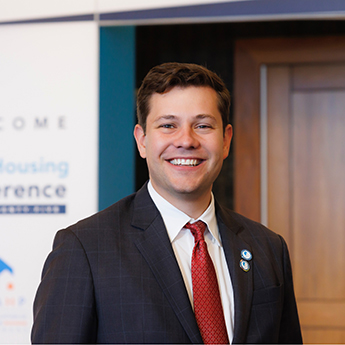
“Affordable housing projects have gotten much more expensive in recent years. That’s just the reality,” says Nick Walsh, vice president of development with The NRP Group. The total cost for each of today’s projects is typically $80 million to $90 million, he points out. “Five or six years ago, they were $40 million or $45 million projects. It’s just harder overall to get it done.”
Walsh explains that hard costs have increased significantly, but so too have land, insurance, soft costs and the interest expense of borrowing money.
Coping with Declining LIHTC Prices
Declining tax credit prices are adding to the challenge of pulling together a viable capital stack for an affordable housing project.
“Right now, affordable housing deals are very hard to close because of the continued rising hard costs and the continued downward credit pricing in the marketplace,” says Justin Hartz, development director at LDG Development.
The prices investors are willing to pay to purchase Low-Income Housing Tax Credits (LIHTC) have been dropping this year, in some locations averaging as low as 85 cents per credit. According to Estelle Chan, Fairstead’s senior director of development, declining LIHTC prices make the capital stack for a project a moving target.
“If there is less equity coming into the project, my pencils have to get sharper,” says Chan, who has three projects underway in Chesapeake, Virginia. “We have to look at every line in the project where your underwriting is your best guess. You have to be innovative to get these projects to pencil.”
Developers offer higher LIHTC prices to investors who enable them to frontload a project’s cash flow. The general decline in tax credit prices puts investors in a stronger bargaining position to negotiate a delayed equity payment schedule — also known as “backloading” — to receive a lower tax credit price.
“To get the best possible pricing on our deal, the investor wants it pushed out, so you have a timing gap,” Chan explains. “The funding isn’t coming in time, especially during the construction period, so we bring in a short-term equity lender to provide bridge financing during construction.”
The expanded allocation for federal LIHTC in the One Big Beautiful Bill Act (OBBA) may continue to depress LIHTC prices. “There will be more credits to go around, so there will be more projects nationally, and that would typically drive pricing down,” says NRP’s Walsh.
“However, one of the other things [OBBA] did was end a lot of the green energy tax credits, and with those going away there actually might be more demand for LIHTC,” he notes.
While construction costs are still increasing — with the impact of tariffs threatening another large spike, assuming the U.S. Supreme Court doesn’t strike them down —developers that provide their own in-house construction and property management services, like NRP, are leveraging their purchasing power to help flatten the rising cost curve.
“Since we’re working on affordable, mixed-income and market-rate projects, we can use our purchasing power to get the best pricing and buy in bulk at the right time,” Walsh says.
“That said, this can only go so far, especially as we head into uncharted territory with tariffs,” Walsh adds.
Focus on Farm Workers
Nonprofit developer MidPen Housing is working with a wide range of partners to develop several projects in California that will reserve affordable units for farmworkers and their families.
In Watsonville, California, Cienega Heights recently became the second delivery of a three-phase development to create affordable homes on nearly 15 acres on the outskirts of the city.
The grand opening for Cienega Heights, which was designed by architect DAHLIN Group and built by general contractor L&D Construction Co., was held in May. The development’s 80 apartments include 39 designated for farmworker families, serving residents earning up to 30 to 60 percent of area median income (AMI).
MidPen completed the first phase of the project, a 46-unit campus known as Pippen Orchards Apartments, in 2018.
The capital stack for the $49 million Cienega Heights project included financing from the Housing Authority of the County of Santa Cruz; the California Department of Housing and Community Development; Central Coast Community Energy; the Land Trust of Santa Cruz County; the California Community Reinvestment Corporation; and Wells Fargo.
The County of Santa Cruz also provided a $3.5 million loan, and the Joe Serna Jr. Farmworker Housing Grant Program contributed $7.4 million to the development.
“On all of our projects, public-private partnerships are paramount to our success in meeting the communities’ needs and getting the project over the finish line financially,” says Joanna Carman, senior vice president at MidPen.
“Part of the job of an affordable housing developer is to be nimble,” she adds. “Communities will adjust their goals for affordable housing based on what’s available. It’s a puzzle that we keep working through with our partners.”
MidPen purchased privately owned land for the Cienega Heights development, which straddles the city line and an unincorporated part of Santa Cruz County that Watsonville soon will annex.
“For some projects we acquire land, on others the property owner will provide a ground lease and make improvements,” explains Carman.
MidPen, the owner and operator of Cienega Heights, pulls together the capital stack for each of its developments by aiming to maintain the fiscal viability of the project throughout its entire life cycle.
“We build for the long term,” says Carman. “It’s a long-term ownership and a partnership with our property management services (division). We provide quality housing from day one through the life of the project.”
State LIHTC, Capital Leases Get Penciled In
State LIHTC programs have become a major source of gap financing for affordable housing projects. More than 30 states now are offering state tax credits, with most pairing state LIHTC with federal LIHTC.
Several states have bifurcated LIHTC programs in which the state credits are entirely separate from the federal credits, giving developers and investors more flexibility since the state credits can be transferred or certified independently of federal LIHTC. A key factor in the value of state credits is the duration of the credit, which varies from state to state.
Ohio’s tax credits, introduced in 2023 and known as OLIHTC, are paired with federal credits. The OLIHTC program offers a 10-year window for investors to claim tax credits against their state tax liabilities, mirroring the federal LIHTC program.
“We’re combining our state LIHTC with our 4 percent federal LIHTC and bonds, so it ends up mirroring 9 percent equity,” says Matt Sutter, senior director of housing programs at the Ohio Housing Finance Agency (OHFA), the state agency that awards LIHTC credits.
The largest affordable housing development to be awarded OLIHTC credits thus far is Emerald Place, a $65.5 million, 216-unit project that is rising on rezoned agricultural land in Lancaster, Ohio, southeast of Columbus. Emerald Place, the first development in Ohio for Kentucky-based LDG, will reserve units for families earning between 40 and 70 percent of AMI.
Under Ohio’s qualified allocation plan (QAP) for LIHTC, LDG underwent an experience and capacity review to secure federal and state credits.
“We want to see developers who have an understanding of the LIHTC program and what it takes,” says Sutter. “We’re not picking winners and losers. Developers can have a certain number of deals, and we pick projects with developers who are required to meet their own capacity standards or partner with someone who does.”
In addition to federal and state LIHTC credits that have been purchased by KeyBank, the Emerald Place project penciled out with support from the City of Lancaster and the Lancaster Port Authority, which provided a capital lease for the site.
Capital leases, also known as finance leases, allow the lessee to assume the economic benefits of the purchase of a site without actually acquiring the land. The transaction is treated as a purchase for accounting purposes; it is recognized on the lessee’s balance sheet as both an asset and a long-term liability.

“In the partnership we have for Emerald Place, the Port [Authority] sits on a ground lease to show that they own the land and then they lease the land back to the partnership, which gives us the tax exemption,” says Hartz. “This is a common transaction in the state of Ohio.”
The capital stack continues to be adjusted through culmination and closing, he says. “Declining LIHTC prices do necessitate adjustments — that’s always an ongoing discussion when you’re closing out your transaction,” says Hartz. “The capital stack is essentially set at the time of construction loan closing.”
LDG is a vertically integrated developer with a long-term hold strategy. “We hold our assets in a long-term portfolio hold, so we’re doing deals for the minimum term of 15 years,” says Hartz.
Austin School Conversion Creates Homes for Teachers
According to NRP’s Walsh, the most challenging part of developing workforce housing in an urban area is finding a suitable parcel that is proximate to jobs, services and transit.
“A lot of times we are pushed farther and farther from the urban core with our new affordable housing projects. That does not help if we continue to push people farther and farther from schools, grocery stores and job centers,” emphasizes Walsh.
“Acquiring land comes with a lot of challenges: finding the right plot, negotiating timelines that align with affordable housing deadlines and competing with market-rate developers who can afford to pay more,” he says.
Publicly owned sites can help remove many of those challenges. “The public entity often shares the common goal of providing affordable housing, and leveraging their land makes these projects a lot easier,” Walsh notes.
NRP is partnering with the Austin Independent School District (AISD) in Texas to convert the publicly owned site of the Anita Coy Ferrales Facility, currently occupied by a learning center, into two housing developments encompassing more than 650 units.
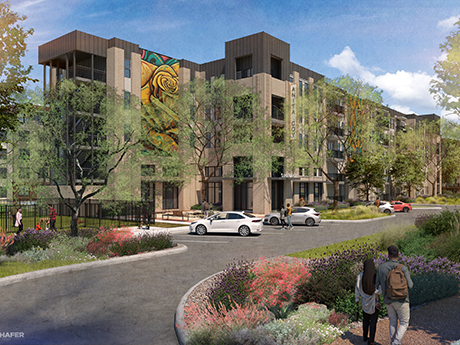
Half of units will be reserved for household incomes up to 60 and 80 percent of AMI. The project will have a “Preferred Employer Program” to incentivize district employees, particularly teachers, to live in the community. About 45 percent of the units will be family-sized, including nearly 50 three-bedroom apartments. That’s in response to the neighborhood’s significant shortage of larger, family-friendly units.
The AISD will remain the owner of the property and provide a ground lease to NRP. The Anita Coy project, which isn’t using LIHTC, leverages the value of the school district’s land and a tax abatement to provide rent and income restrictions for half the units, along with additional financial benefits.
The AISD is tackling a looming budget deficit with a consolidation plan that includes merging and closing some of its campuses.
“The AISD, like many urban school districts, had to shut down several campuses, including one of the properties that they own in a fantastic neighborhood very close to the urban core,” says Walsh.
“They had two options: they could sell it for a one-time cash infusion or they could do an RFP and develop workforce housing that would attract and retain teachers,” he says. “We’re going to end up doing nearly 700 units of multifamily housing on this former elementary school property.”
NRP recently completed the Bridge at Estancia, a 318-unit affordable housing community in Austin that is part of the Estancia Hill Country master plan, a 600-acre mixed-use development that sits adjacent to a site that will be occupied by a new Texas Children’s Hospital.
Bridge at Estancia, which will provide housing for residents earning up to 60 percent of AMI, was developed in partnership with the Housing Authority of the City of Austin (HACA). HACA’s ability to provide project-facing vouchers was a key element in pulling together a viable capital stack for the project.

Project-based vouchers (PBVs) are a component of the federal Housing Choice Voucher (HCV) program that provides rental assistance to low-income individuals and families. Unlike the more common tenant-based HCVs, which can be used at any eligible property, project-facing vouchers remain with the designated unit, even if the original tenant moves out.
Walsh explains that lenders can underwrite project-based vouchers at a higher payment standard than that of the typical rent for a household at a lower AMI level.
“That is extra assistance that goes right to the capital stack, and it makes a huge impact,” he says. “Every single voucher that is given to a project can amount to over $100,000 or more.”
Walsh says this not only makes the project more feasible, it bakes in affordability, ensuring a family with a household income that is 30 or 50 percent below AMI will have access.
Small PHAs Need Large Developers
To navigate the nuances of financing its first conversion under HUD’s RAD/Section 18 program — a $10 million renovation of the 65-unit Peaceful Village public housing community in Virginia — Chesapeake Redevelopment and Housing Authority (CHRA) is partnering with Fairstead, a national vertically integrated developer.
“We’re a relatively small organization, with very little development staff,” says CHRA Executive Director John Kownack. “We’re in a world now where we rely on LIHTC equity and private debt to make improvements to our property. The capacity that Fairstead brings in is much more than what we’re allowed to do as a small housing authority.”
Financial partners for the Peaceful Village renovation include Berkadia and Freddie Mac, which provided debt financing, and equity partner U.S. Bancorp Impact Finance, the community development financing subsidiary of U.S. Bank. Woodforest Bank provided bridge financing for the project. CRHA will continue to serve as the property manager for the community.
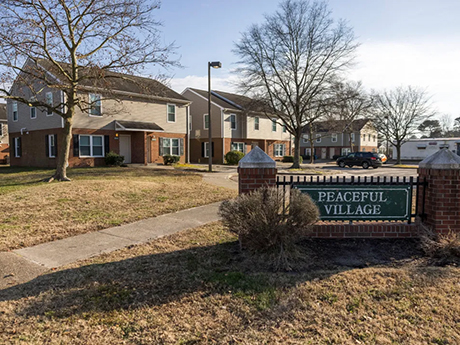
“Fairstead has been in the Hampton Roads region since 2017,” says Chan, who led the Chesapeake project. “We have decades of experience in preservation and restoration of public housing. We also leverage our balance sheets. We have a long-term relationship with capital investors.”
According to Kownack, the increasing need for affordable housing across the U.S. is beginning to act as a counterweight against pervasive NIMBYism (not in my backyard).
“The one good thing about having a housing crisis is there’s increased awareness of the need,” says Kownack. “We’ve found partners that were on the NIMBY side of the house that are now coming to us and asking, ‘What can we do?’”
While NIMBYism may be starting to recede, the challenges of financing new affordable housing developments keep growing.
“Prior to COVID, we had developers clamoring for land and permission. They said, ‘Give us land or give us the ability to build on developable lots, and we can find the capital stack to do that,’” recalls Kownack.
“Five years ago, you could do a 9 percent LIHTC [project] with minimal debt and build some really good stuff. Now, we really have to coax them. We’ve identified four or five parcels, and we really can’t get folks to come in just because the margins are so much thinner than they were five years ago,” he explains.
“Now, you need energy tax credits at the state level, you need developable land at the local level, and you need a lot of financial support,” says Kownack. “We just had a project where we’re putting in $90,000 per unit of federal loan money to just sweeten the pot in order to get folks to build.”
While the complexities of pulling together a resilient capital stack for affordable housing loom large, Kownack says overcoming the NIMBY crowd remains the largest hurdle to bringing new projects to fruition.
“The biggest thing is still getting [the local community] to embrace the idea that quality multifamily rental housing for low-income tenants actually can strengthen your neighborhoods and is not a threat,” he says. “The demand is here, and the people are already here.”
Redo of Historic Denver Icon Takes a Village of Funding Sources
Developers are pulling together broad coalitions of public, private and nonprofit partners to get affordable housing projects to pencil out in today’s difficult cycle.
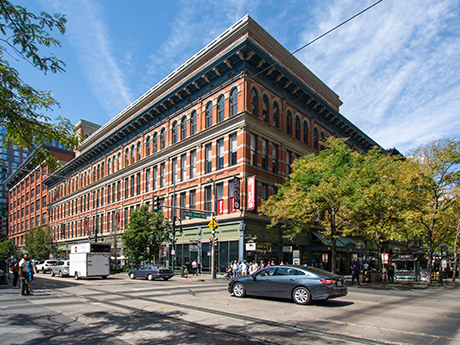
Denver is hoping to jumpstart its struggling downtown recovery with an adaptive reuse and revitalization project at the historic Denver Dry Goods Building (DDG).

The post-pandemic malaise in downtown Denver’s office sector continued in the second quarter of 2025, with CBRE reporting that the total office vacancy rate downtown ticked up to 36.8 percent.
Built in 1888, DDG was the largest department store in the region until it went out of business in the 1980s and was purchased by the Denver Urban Renewal Authority (DURA).
In 1994, DURA partnered with the city and Jonathan Rose Cos. to redevelop DDG into a 300,000-square-foot mixed-use property using a pioneering mix of historic tax credits (HTC), LIHTC and tax-increment financing.
The 1994 redo of DDG catalyzed the adaptive reuse of 10 other historic buildings and the addition of more than 320 affordable housing units in downtown Denver over the following decade.
Jonathan Rose’s Denver subsidiary, Perry Rose LLC, is handling the second redo of DDG, with DURA as its primary public agency partner. The $67 million project will rehabilitate 51 existing affordable units and convert two floors of vacant commercial space into 54 new affordable housing units. The 106-unit project will serve residents earning between 30 percent and 80 percent of area median income (AMI).

“We knew going in that we would require a variety of different funding sources, including public aid,” says Haley Jordahl, director of development at Perry Rose. “It really required a village to help bring it to fruition.”
Colorado Housing and Finance Authority is providing a 4 percent and state LITHC, as well as construction and permanent loan financing. The Richman Group, a tax credit syndicator, has purchased all the federal and state LIHTC for the project through a fund with American Express.
The Community Opportunity Fund, a nonprofit part-owner of the project that will provide resident services, is contributing $8.6 million in soft financing through several targeted grants from public sources. Denver’s Housing Department is providing $5.5 million in funding for the redevelopment; the project also will receive $1.3 million from Denver’s Climate Action, Sustainability and Resiliency (CASR) Department.
A diversified capital stack enables this adaptive reuse project to address the requirement of historic preservation of the building while installing new systems.
“We are required to restore the building’s historic exterior, including balustrade and cornice features, as well as its historic windows, so that’s quite an undertaking in and of itself,” Jordahl explains.
Today, the DDG relies on a steam heating loop that serves downtown Denver. The redevelopment will transition the 106 affordable units to electric heating and cooling, using split-system heat pumps, which will reduce the building’s energy use.
“There are more constraints that come with converting the heating and cooling system in an historic building,” Jordahl says. “You can’t make significant changes to the building’s exterior, so you need to think about how that system can be fully enclosed within the building core.”
Perry Rose is decommissioning two existing elevators in the DDG and running refrigerant lines up through the elevator shafts to mechanical systems that will sit at the top of the building.
Other planned improvements include updated kitchens and appliances in existing units. The project will convert 18,500 square feet of basement space into resident-focused amenities like a fitness center, mailroom, leasing offices and flexible space for onsite services.
OZ Architecture designed the project, which is expected to be completed early in 2027. Palace Construction will build the interior improvements, and Summit Sealants will perform exterior repairs. The construction, design and development team are all locally owned firms based in Denver.
— Jack Rogers