

ATLANTA — Affordable housing developers are fighting an uphill battle, and on multiple fronts.
On the demand side, renters are more cost-burdened than ever before. According to the “America’s Rental Housing 2026”report from the Joint Center for Housing Studies of Harvard University, the number of renters who are cost-burdened (households that spend more than 30 percent of their income on rent and utilities) reached a new record high in 2024.
The report found that 22.7 million renter households were cost-burdened in 2024, with 12.1 million households qualifying as “severely cost-burdened” (households that spend more than half of their income on rent and utilities).
“People are really struggling to pay rent — the cost of living is really crushing renters,” said Christopher Byrd, Southeast region development director at LDG Development, an affordable housing developer based in Louisville, Kentucky. “The biggest struggle that we’re dealing with is serving our residents and trying to offer peace of mind. We’re in the right markets, we’re serving the right populations, and we are doing everything that we can to work with our residents to get through these tough times.”
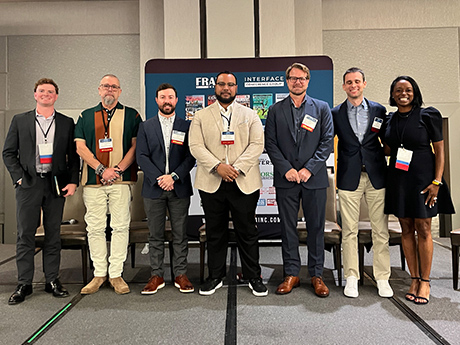
Byrd shared his insights during an industry outlook panel discussion at InterFace Affordable Housing Southeast, a half-day event that took place on Tuesday, May 12 at The Westin Buckhead in Atlanta. Multifamily & Affordable Housing Business, Southeast Real Estate Business and InterFace Conference Group, a division of Atlanta-based France Media Inc., co-hosted the event. Mona Sullivan, managing partner at JRS Risk Consultants, a privately held insurance and risk finance solutions firm based in Atlanta, moderated the panel.
Uphill Climb for Developers
Between 2014 and 2024, the United States lost 7.3 million units that were renting for below $1,000 per month, according to the Joint Center. These units were lost for multiple factors, including obsolescence, demolition, the expiration of income-related subsidies and capital improvements made by value-add investors.
The panelists noted that it’s not getting any cheaper to develop. Construction materials costs have risen more than 45 percent since early 2020, according to the U.S. Bureau of Labor Statistics, and interest rates remain elevated for construction financing.
The Low-Income Housing Tax Credit (LIHTC) program, an indirect federal subsidy, is the dominant driver of affordable housing, accounting for approximately 90 percent of all newly created affordable rental housing in the United States today.
Affordable housing developments financed through the LIHTC program utilize a layered capital stack. Private banks and commercial lenders provide the primary, short-term construction loan. For strong developers, rates sit between 6.5 and 8.5 percent, while more complex or higher-leverage deals can push toward 9.5 percent. Five years ago, primary short-term construction loan rates for LIHTC developments typically averaged between 3 and 4.5 percent.
Joel Reed, Southeast market president at Gorman & Co., a workforce and affordable housing development firm based in Wisconsin,stated that pricing for the low-income housing tax credits, continues to slide, leaving a widening financing gap for affordable housing developers.
“Equity pricing is our biggest challenge right now,” said Reed. “We’ve seen a 10- to 15-cent drop in equity pricing over the past couple of years. On a large project that can be a $4.5 million gap, which really strains the deal.”
It Takes a Village
Partnerships are non-negotiable to get affordable housing developments off the ground. Capital partners at all levels of the public and private continuum are necessary cogs in the machine, as well as the relationships between housing authorities and private developers.
“[Affordable housing] is a really difficult market, so a way to alleviate that financial concern is by developing these different partnerships,” said Ryan Summerwill, senior development associate of the Southeast region at Dominium, an affordable housing development and management firm that operates more than 40,000 units nationwide.
“There are a lot of different resources out there from both state and local levels that incentivize housing in specific areas — we just did an RFA deal with the State of Florida. Thinking outside of what we would consider our own box of how we do projects is really formulating how we can make these deals feasible.”
RFAs, or request for applications, are documents issued by government entities and housing authorities that announce grant funding opportunities for affordable housing developers.
Dennis Richards, vice president of housing policy and development at Atlanta Beltline Inc. (ABI), noted a few times during the panel discussion that his organization is partnering with affordable housing developers and stakeholders to facilitate new affordable housing. The ABI is the agency that oversees the development of the Atlanta Beltline, a 22-mile urban trail loop underway that connects 45 intown neighborhoods in Atlanta.
In addition to the multi-use trails and the thousands of acres of public greenspace, the ABI also oversees the affordable housing aspirations for the Beltline.
“The delta between market rates and [affordable] is growing in Atlanta,” said Richards. “Since 2019, the area median income (AMI) for Atlanta has grown by nearly 50 percent. That’s pushing a lot of families outside the city.”
The ABI relies on partnerships with private developers to get affordable housing deals to pencil out. Outside of assembling parcels within a half mile of the Beltline, the ABI is setting up tax allocation districts to incentive affordable housing developers. But Richards pointed out that sometimes the organization must call in the big guns to help developers cut through the red tape.
“Atlanta Mayor Andre Dickens set up a task force where we’re trying to get a hold of some of the issues that have challenged us in the past, such as elongated entitlement reviews,” explained Richards.
The panel emphasized that the most important partnerships are with the surrounding neighborhoods where they’re building. A few panelists noted that they want to serve the local communities with their housing projects, which can often be met with resistance.
“All communities have a need for affordable housing — it’s a question whether or not they want it,” said Reed. “Our outlook is we don’t want to force affordable housing on anyone. We want to be a partner.”
Byrd noted that sometimes developers must push through the early stages of confrontation to best fulfill their mission.
“I love going into a neighborhood that wants to burn me at the stake one minute — and maybe that night I have to be escorted out by the police — and six months later we’re all hugging,” said Byrd.
Utility, Transportation Costs Loom Large
The panelists stressed the importance of helping control ancillary costs for their tenants. One way is to implement energy efficient electrical and plumbing fixtures and mechanical systems into the building design. Byrd said that LDG Development approaches sustainable design as more than a requirement.
“Energy efficiency is something that we’re required to do, but we don’t treat it as a box to check,” said Byrd. “When we’re discussing affordability, that discussion includes utility bills because utilities are high, and that translates to the residents. There’s a cost associated with it, obviously, but at the end of the day, sustainability benefits the resident, and that’s what we stay focused on.”
Summerwill added that it also behooves developers and other stakeholders to invest in sustainable design practices from the ground-up to mitigate maintenance issues and lower operating expenditures in the long run.
Access to transportation was another factor that the panelists said helps ease costs for renters. Developers are responding to requests for proposals (RFPs) from housing authorities that own or control land near transit stations and other modes of transportation, including the Atlanta Beltline, to help their residents save on transportation costs.
“Our low-income tenants could be spending more than 50 percent [of their income] on transportation alone,” said Reed. “Whatever we can do to help that, that’s what I want to do in our projects.”
When asked about trends that the panelists are passionate about, Reed said that he wants to integrate bike storage units complete with e-bikes and charging stations into their communities. He added that he wants bike storage to be an added requirement for Qualified Allocation Plans (QAPs) at the state level.
Reed also championed the idea of driverless taxis for resident use.
“I’d love for us to be able to get a robotaxi for our tenants,” he said. “We can get rid of the very expensive parking structures and have a robotaxi that’s running our tenants around.”
— John Nelson