
By Steve Wernick

For years, church-owned land and government parcels sat unused in the middle of Florida’s housing shortage. They were available in theory, but off-limits in practice.
Now, through House Bill (HB) 1389, a new round of amendments to the Live Local Act is unlocking that land, limiting local roadblocks and expanding how and where affordable housing can be built across the state. The amendments were approved in March and go into effect July 1.
Florida’s housing market continues to gain momentum, and with it comes an opportunity to rethink how affordable housing gets delivered. The Live Local Act, passed in 2023, is a Florida law aimed at increasing affordable and workforce housing.
It does this by overriding certain local zoning rules and offering incentives to developers that include income-restricted units. The law has already gone through multiple rounds of amendments to address early challenges and expand its reach.
The latest updates, through HB 1389, are designed to move the law from concept to execution, giving developers clearer direction and a smoother path to bring projects to fruition.
Challenges Developers Faced Before HB 1389
Florida’s Live Local Act has seen numerous projects proposed across the state, particularly in Miami-Dade, Hillsborough, Broward and Palm Beach counties. However, the first wave of projects since 2023 has faced challenges, including local ordinances designed to create additional setbacks and other zoning standards that counteract the ability for developers to utilize the development rights afforded under the act.
At the same time, key sites were effectively off-limits. Government-owned land and properties held by religious institutions often required lengthy public hearing approvals to authorize residential use, limiting options in high-demand locations.
Even when a site qualified, uncertainty around tax exemptions created friction that slowed timelines and complicated financing. The result was a law with strong intent, but challenges in implementation.
Key Changes Expanding Development Opportunities
House Bill 1389 addresses these gaps in a meaningful way. First, the bill expands the types of land eligible for development. Properties owned by a municipality, county or school district, when a public entity participates as a co-applicant, can now qualify for development rights under the Live Local Act.
Religious institutions can also unlock their land, provided the site is greater than 3 acres and has a house of public worship operating for at least 10 years. These changes bring previously untapped sites into play, particularly in areas where land is scarce.
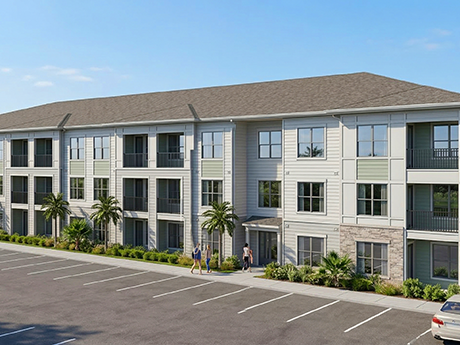
Second, the law broadens the definition of multifamily housing to include horizontal developments like garden-style and build-to-rent communities. This gives developers more flexibility in how they design projects, allowing them to better match local market needs.
Third, zoning protections have been strengthened. Local governments are now limited in their ability to impose new restrictions — such as requiring buildings to sit farther back from the street or requiring upper floors to be pushed back above a certain height — if those rules would effectively block Live Local projects.
Lastly, HB 1389 amends the Florida Fair Housing Act to extend protections against discrimination specifically for Live Local developments. The bill waives sovereign immunity for causes of action brought against cities and counties, giving developers a clear path to enforce compliance and reducing the risk of projects being blocked by local governments.
Opportunities for Developers
Taken together, these changes open new doors. With more sites available and clearer rules in place, developers can pursue projects that were previously difficult or impossible to execute. The added legal protections also reduce uncertainty, making it easier to move forward with confidence.
Importantly, these updates may also bring new players into the market. Smaller firms and emerging developers, who may have been deterred by complexity or risk, now have a more accessible framework to participate.
Opportunities That Remain
Even with this progress, there is still room to expand the impact of the Live Local Act. One of the biggest gaps in Florida’s housing supply is in “missing middle” housing — duplexes, townhomes and small multifamily buildings that sit between single-family homes and large-scale developments.
These housing types are not fully addressed in the current framework but are critical to meeting demand in many communities. Currently, tax exemptions under Florida’s Live Local Act are only available to projects with at least 70 dwelling units. Reducing this threshold or creating targeted incentives for smaller-scale projects could help bring these developments into the pipeline while stimulating housing production on infill sites.
At the same time, broader constraints remain. Infrastructure capacity, land costs, and construction pricing will continue to influence what gets built. Community sentiment, while less able to block projects outright, can still affect timing and execution.
Looking Ahead: Florida’s Evolving Housing Policy
The latest amendments signal a clear direction: Florida is prioritizing housing production and reducing barriers to development. By clarifying rules, expanding eligible land and limiting local interference, the state is creating a more consistent and predictable environment for developers to deliver housing at scale.
Steven Wernick is a Miami-based partner at the corporate law firm Day Pitney.