

By John Nelson
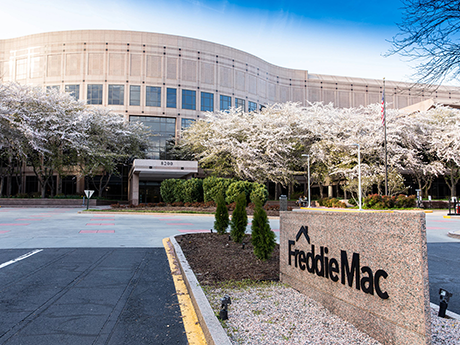
Fannie Mae and Freddie Mac are scaling up their multifamily loan production this year while their partner servicers and underwriters are aggressively pursuing new business.
The Federal Housing Finance Agency (FHFA), which has been the conservator of the two government-sponsored enterprises (GSEs) since 2008, blew open the annual lending caps for the two agencies this year. The new caps are set at $88 billion apiece, which is a more than 20 percent increase from the 2025 cap and the highest dollar amount allotted by the FHFA since it established the volume caps starting with the 2015 calendar year.
“Whether each agency will get to $88 billion remains to be seen with many variables in play, including interest rate levels and investment sales activity,” says Landon Litty, director of agency sales for BWE, a national mortgage banking and originator based in Cleveland. “Both agencies are actively working to deploy their allocated capital, while at the same time keeping a close eye on efficiency and profitability.”
TJ Edwards, senior vice president of capital markets and chief production officer for real estate finance at Walker & Dunlop, says that the new lending caps have given the agencies a green light for all manner of deals, not just the mission-driven affordable housing loans they are chartered to produce.
“Historically, when they had smaller caps, we saw Fannie Mae and Freddie Mac be hyper-focused on workforce and affordable housing in the first and second quarters. But now we are seeing them be super-competitive on all deal types — and that includes Class A, new construction deals,” says Edwards. “It’s a great sign that they’re trying to win business on both affordable and Class A deals across the country, and in all markets.”
Fannie Mae generated $17.1 billion in multifamily loans in the first quarter of 2026, up from $11.8 billion in first-quarter 2025, a 45 percent increase. Freddie Mac posted a 40 percent year-over-year increase in multifamily loans generated, going from $10 billion in first-quarter 2025 to $14 billion in first-quarter 2026.
David Kurrle, director of originations for Regions Real Estate Capital Markets, says that through April, Fannie Mae and Freddie Mac reported volumes of $23 billion and $20.3 billion, respectively, which is a marked increase from $17.5 billion (Fannie) and $13.1 billion (Freddie) in the same period a year ago.
“The second quarter of 2026 is showing continued strength, with some areas normalizing,” says Kurrle.
Litty says that the extended runway from the FHFA has enabled Fannie Mae and Freddie Mac to be competitive for larger deals. Here’s a sample of some of the larger agency loans executed so far this year:
- Avison Young arranged a $404 million Freddie Mac permanent loan through PNC Bank for The Archive, a 479-unit historic apartment building located at 666 Greenwich St. in Manhattan’s West Village, on behalf of an affiliate of Rockrose Development.
- JLL provided $296 million in Freddie Mac financing for a portfolio of 13 multifamily properties totaling 1,880 units in New Jersey for an undisclosed borrower.
- The Fannie Mae agency provided a $63.4 million loan for the refinancing of Standard Assembly, a 310-unit mixed-income community in Nashville, for Atlas Real Estate Partners.
Walker & Dunlop has been actively sizing and underwriting large portfolios for institutional clients, according to Edwards. Earlier this year, the firm provided $1.72 billion in Freddie Mac loans for the refinancing of a 52-property portfolio of workforce and affordable housing communities on behalf of Starwood Capital Group.
“The refinancings were a 10-year Freddie Mac product, which is an exceptional execution,” says Edwards. “We are seeing a decent number of inquiries from institutional clients to look at portfolio and other large transactions.”
Todd Goulet, senior vice president of KeyBank Real Estate Capital, says that the agencies are tweaking their various loan products to be more competitive in subcategories including student housing and seniors housing.
“Freddie Mac is getting really aggressive with seniors and student housing, and Fannie Mae is starting to step into those spaces a little more,” says Goulet. “We just closed a student housing deal with Fannie Mae in a market it wouldn’t have touched two years ago, but the deal was for a good client on an acquisition. Fannie stepped up with 70 percent loan-to-value on the transaction and offered better terms than Freddie Mac.”
On the seniors housing front, BWE recently closed a 10-year, $40 million cash-out refinancing through Freddie Mac for a 167-unit independent living community near Raleigh for Rauls Living.

Beyond widening their scope at the property level, sources interviewed for this story say that the agencies have put their own processes under the microscope to gain a competitive edge.
“Efficiency is probably what’s talked about the most by both agencies. They want to get to quotes faster, they want to get to rate lock faster, they want to close faster by using more resources and by leveraging technology — AI especially,” says Goulet. “They’re trying to do more volume with limited resources, and so they’re trying to become more efficient in order to accomplish greater volume.”
Capital Markets Breakdown
Interest rates remain at the crux of agency financing activity. The Federal Reserve has left the federal funds rate — the interest rate that commercial banks and other depository institutions charge one another for overnight loans on an uncollateralized basis — untouched this year at a target range of 3.5 to 3.75 percent. The Secured Overnight Financing Rate (SOFR) is at a similar level — 3.6 percent as of this writing.
The U.S. 10-year Treasury yield, the benchmark rate for long-term permanent financing, has been a little more volatile. The 10-year Treasury yield is currently hovering above 4.5 percent after dipping below 4 percent in late February. The five-year Treasury yield had a similar movement profile as the rate also dipped in February (to around 3.7 percent) before rising to 4.2 percent in early June.
Patrick McGlohn, senior managing director of Berkadia, says that the agencies and their corresponding lenders are locking in deals when the Treasury yield dips, with some citing 4 percent as the unofficial line of demarcation. Since March, many borrowers have taken a wait-and-see approach as deals underwritten with an index at 4.5 percent or higher aren’t penciling out.
“There are believers that the 10-year Treasury yield is going to come down, and they’re interested in shorter-term debt still,” says McGlohn. “They believe in five years the rates are going to be much lower than they are today. My opinion is that we’re in a low to mid-4 percent band [for the 10-year yield], and it does feel like borrowers are coming around to maybe accepting that it’s potentially the new normal.”
Matt Swerdlow, senior director of capital services at Ariel Property Advisors, a commercial real estate services and advisory firm based in New York City, says that capital costs are currently “on the high end of what’s acceptable.”
“I track the 10-year Treasury yield, and 4.5 percent is my barometer for trouble,’’ he says. “Every time the yield crosses 4.5 percent, we typically see a sell-off in the stock market.”
Litty says that interest rate volatility is no longer fazing borrowers following years of interest rate hikes from the Federal Reserve and the stream of geopolitical events in recent years, including the tariff hikes imposed by the Trump administration beginning last year and the 2026 Iran war.
“Volatility in the Treasury markets has almost become the norm,” says Litty. “However, agency spreads remain at historically low levels, keeping all-in rates at transactable levels.”
“Agency executions remain among the most competitive capital sources today, with spreads tightening by roughly 10 basis points over the past year,” adds Ian Monk, senior managing director and head of conventional production at Lument.
Of course, the spread offered on agency loans depends on many factors, including leverage and the debt-service coverage ratio, but Litty estimates that five-year agency spreads are typically in the range of 140 to 150 basis points, and spreads for 10-year agency loans range anywhere from 115 to 130 basis points.
He adds that “a high percentage of sponsors” are electing to use interest rate buydown mechanisms from Fannie Mae and Freddie Mac to lower spreads even further and increase loan proceeds. Goulet says that the agencies recently enhanced their buydown programs.
“Fannie Mae recently changed its buydown policy to match Freddie Mac’s — up to a 2 percent buydown across the board, no matter the term of the loan — because it was a little bit short on the five- and seven-year options,” says Goulet.
A Regional Perspective
Tenant demand remains robust in the U.S. multifamily sector. RealPage, the Richardson, Texas-based data analytics firm, reports that 93,277 units were absorbed in the first quarter of 2026, which outpaced the delivery of 75,205 market-rate apartments.
Kurrle says that dynamic should remain intact as construction starts are stymied due in part to higher construction costs.
“The forward-supply pipeline appears more manageable than it did a year ago,” says Kurrle.
Mike Ortlip, senior managing director at NewPoint Real Estate Capital, concurs. He adds that 2027 will likely be the inflection year when multifamily absorption outpaces deliveries in earnest.
“While the top-line data shows demand outpacing supply today, the lived reality on the ground is far more mixed,” says Ortlip.
The multifamily market is best studied at market or even submarket levels as each metropolitan area has its own demand drivers and unique set of barriers to entry. On a regional level, Kurrle says that the strongest markets fundamentally can currently be found in the Northeast.
“Occupancies in many Northeast markets have remained relatively steady without significant fluctuation over the past few years,” he says. “Markets throughout New York, New Jersey, Massachusetts and Pennsylvania continue to benefit from a large inventory of smaller and older apartment buildings, which has helped moderate the impact of new supply.”
McGlohn says that the Sun Belt markets are currently working their way through oversupply in their top metros, including Austin, Raleigh and Nashville.
“There are some Sun Belt markets that have a good amount of supply that still might take another 18 to 24 months to get through, with some heavy concessions needed,” says McGlohn.
AJ Bolino, director at Regions Real Estate Capital Markets, says that his region (Northern California’s Bay area) is also seeing strong fundamentals in its supply-demand dynamic.
“Vacancies in the Bay Area remain relatively tight compared to other core U.S. markets,” says Bolino. “Rents, while off pre-pandemic peaks, remain among the highest in the country.”
Asking rental rates for San Jose exceed $3,000 per month while rental rates in San Francisco hover over $4,000 per month, according to Zillow, the giant U.S. listing site for multifamily rentals and single-family homes.
Swerdlow says that cities in the Northeast and West Coast that pushed for rent stabilization coming out of COVID are the ones paradoxically experiencing rent growth today, while their peer markets in the Sun Belt did not enact similar mandates.
“The markets with positive rent growth are ones like New York City that have rent regulations and tenant protections,” says Swerdlow. “This is a case of unintended consequences from policymakers. The cities with the healthiest apartment markets are the ones with more regulations and more barriers to entry.”
“Eventually everything will get absorbed, but it will take time,” continues Swerdlow. “And it won’t be the same amount of time for each market.”
Where Does That Leave Rents?
Sources interviewed for this story say that a fly in the ointment for many owners is the prospect of flat or negative rent growth and high concessions. Yardi Matrix reports that the U.S. multifamily sector’s advertised rents rose slightly in May ($1,767 per month on average) but remain relatively flat year-over year, while average advertised rates for the build-to-rent market ($2,224) are slightly down year-over-year.
“Consistent rent growth is not anticipated to return until 2027,” says Litty of BWE.
Swerdlow says that a lackluster rent program makes underwriting a refinancing or an acquisition loan an uphill climb.
“Nobody on this planet underwrites negative rent growth going into a deal,” says Swerdlow. “The fact that these markets are seeing several consecutive years of flat to negative rent growth is a real problem for lenders. There are multiple forces that are pushing these prices down in different markets.”
Monk of Lument adds that the rent scenario requires “a level of discipline we haven’t seen in years” in terms of underwriting.
“In markets with flat or negative rent growth, borrowers are grounding assumptions in current performance rather than near-term upside,” he says.
Goulet says that Fannie Mae and Freddie Mac are paying close attention to rent rolls in their models for their exit tests.
“Lower projected rent growth could impact proceeds,” says Goulet. “They’re trying to understand if concessions are burning off for newer product that’s being delivered and then looking at how lower rent growth over the term of the loan can impact loan proceeds.”
McGlohn of Berkadia says that merchant developers that have had to stabilize their developments at rents at or below pro-forma levels are in a holding pattern until the market improves, especially in Sun Belt cities that were oversupplied post-COVID.
“Developers are waiting to sell because they’re trying to time the market,” says McGlohn. “They’re trying to buy enough time to get through the supply wave and push rents on the back end when that individual market has more pricing power.”
Ortlip adds that negative leverage — when all-in interest rates exceed cap rates — continues to temper transaction velocity, particularly for stabilized assets.
Acquisitions on the Horizon?
As developers hold on a little longer for their rent scenarios to improve, fewer developments are coming to market and selling. McGlohn says that banks provided a lot of loan extensions over the past couple years, but now they’re motivated to limit their exposure to the sector.
“There is more pressure from banks to get those loans off their books, so we’re seeing more bank-to-bridge executions [from] debt fund lenders,” says McGlohn.
“Depending on the market, some developers are also opting to go with five-year agency debt and then layering in preferred equity. Those are the two mechanisms we’ve seen as banks want to push those loans off their books when sponsors aren’t ready to sell yet.”
According to MSCI Real Capital Analytics, U.S. multifamily sales rose slightly (1 percent) in the first quarter of 2026 compared with first-quarter 2025. But at $32 billion, that figure is well below the $55 billion quarterly average over the past five years, though investment sales did rebound by 9 percent for all of 2025 compared with 2024.
“I wouldn’t anticipate there to be much of a change in overall transaction volume this year compared to last year,” says Goulet.
Bolino of Regions has a different take on the state of the investment sales market than Goulet. Bolino anticipates a capital event having to occur for many owners with loans facing maturity that are also getting pressure from their lenders to sell.
“Several owners won’t be able to make refinancings pencil out under today’s dynamics,” he says. “This sets the table for an increase in the multifamily acquisition activity that had slowed significantly over the past several years. Sponsors will likely take advantage of the opportunity to scoop up assets that can’t be refinanced and must be taken to market.”
Swerdlow says that for Fannie Mae and Freddie Mac to hit or even approach their FHFA lending caps, acquisition financing volumes need to increase.
“Eighty-eight billion dollars is a really high bar for each GSE to hit, especially in this topsy-turvy acquisition market. You really need acquisitions to really be working to hit that number,” says Swerdlow. “The bid-ask spread is certainly coming in, the concept of ‘extend and pretend’ is finally winding down and special servicers and asset managers are finally throwing in the towel. This is all creating a market full of sellers.”
Ortlip says that for acquisitions to meaningfully chip into the FHFA lending caps, it would take a goldilocks scenario involving multiple market forces.
“The market will likely need some combination of lower Treasuries or tighter spreads, firmer rent growth, the burn-off of concessions and continued occupancy gains,” says Ortlip. “Increased transaction activity could also come from owners capitulating on pricing — but that would introduce broader valuation pressure across the market.”
Swerdlow adds that sponsors in acquisition mode are seeing highly competitive loan options from Fannie Mae and Freddie Mac, so the ball is ultimately in the court of the current owners, many of whom have been reluctant to sell in the recent past.
“Buyers are getting positive leverage and getting a tight interest rate, so that’s not really the reason that deals aren’t happening,” he says. “There’s a falling knife dilemma among buyers, which is a little bit paralyzing. Pricing needs to be more realistic. Buyers want to be shown deals where the seller is highly motivated because that’s where one finds the most opportunity.”
This article was first published in sister publication Southeast Real Estate Business.
Fannie, Freddie Modify Their Loan Products to Stay Ahead of the Curve
Fannie Mae and Freddie Mac have been actively upgrading their suite of loan products to remain competitive against other capital sources, including debt funds and life insurance companies. TJ Edwards, senior vice president of capital markets and chief production officer for real estate finance at Walker & Dunlop, says that Fannie Mae is aiming to enhance its Near Stabilization execution to take out new construction loans more quickly.
Freddie Mac updated its Optigo Lease-Up loan product last year to allow borrowers to take out their construction loans at first-mortgage pricing. Edwards says it is an attractive product as supplemental loans are typically priced much higher than the original construction loan.
“The agencies can’t do construction lending, but they can help banks recycle their capital faster, which should allow them to do more construction lending,” says Edwards.
Fannie Mae and Freddie Mac are also leveraging their index lock programs to help borrowers trying to time the market.
“We recently closed a $37 million, stabilized new construction takeout with Fannie Mae, successfully rate locking just hours before a sharp Treasury [yield] move — ultimately delivering an exceptional execution for the borrower,” says Mike Ortlip, senior managing director at NewPoint Real Estate Capital.
“It’s a strong example of how tools like Fannie’s Streamlined Rate Lock (SRL) and Freddie’s Index Lock can be leveraged to capitalize on rate dips and materially improve outcomes in a fast-moving market.”
Edwards adds that the agencies are also tweaking their long-term credit facility and structured adjustable-rate mortgage (SARM) products. Several sources also pointed to Freddie Mac’s innovation in its Small Balance Loan (SBL) program as potentially moving the needle for smaller transactions (for properties in the five- to 50-unit range).
“Freddie Mac moved its SBL program into its broader conventional platform,” says Edwards. “This will create some operational efficiencies for them and allow them to not only excel in the larger loans, but small loans as well.”
Matt Swerdlow, senior director of capital services at Ariel Property Advisors, a commercial real estate services and advisory firm based in New York City, says there is one significant change to Freddie Mac’s SBL program worth monitoring because the modification just went into effect in April of this year.
“The borrower needs to have a collective net worth greater than $5 million,” says Swerdlow. “Typically, the net worth requirement was a one-to-one of the loan amount, but now you have to have more than $5 million, even if it’s just to get a $2 million loan. That’s going to be really interesting to see how that change flows through different markets.”
Much like last year, borrowers are mostly electing to use five-year, fixed-rate loan products from Fannie Mae and Freddie Mac. Edwards says that five-year, fixed-rate loans comprise more than half of Walker & Dunlop’s GSE loan production thus far this year.
“Five-year is still the hot product, people still want flexibility,” says Edwards.
“While borrowers are accepting higher rates today, they want flexibility and optionality in a few years,” adds AJ Bolino, director at Regions Real Estate Capital Markets. “In addition, a five-year loan allows borrowers to recapitalize sooner and restructure more easily versus waiting a full 10 years.”
Even with shorter-term loans dominating the types of deals that are being executed, sources agree that inquiries are up across the board for longer-term debt and even for floating-rate executions.
Although borrowers want to see all their options, floating-rate debt remains less popular because borrowers seeking that type of flexibility can typically get better underwriting terms via the highly active debt funds.
“I have not seen GSE variable-rate loans become popular,” says Swerdlow. “The debt fund process is more user-friendly, there’s easier servicing, it closes quicker and there are fewer questions asked.”
Swerdlow has also observed an uptick in inquiries for seven- and 10-year agency loans because those products have longer interest-only periods and lower spreads over the duration of the loan compared to short-term debt.
— John Nelson