
By Eric Williams
Cities across the country need more housing, and underused urban properties offer an obvious place to build it. Former gas stations, auto-oriented businesses, light industrial properties and vacant buildings often sit in established neighborhoods near infrastructure, transit, jobs and services.
So why do developers keep passing them by?
In many cases, the answer comes down to risk. Past uses may have left behind asbestos, contaminated soil or groundwater or other environmental concerns. Even when a site has few environmental issues, perceived risk and uncertainty about unknown conditions can discourage investment.
At the same time, undeveloped land or pristine sites often offer developers fewer unknowns, lower upfront costs and a simpler path to construction.
Cities that want to attract multifamily investment need to understand how developers evaluate potential urban infill projects. Developers typically ask three fundamental questions: Can we identify and quantify the risk? Can we make the numbers work? And can we move fast enough to meet the market? Local governments can help answer all three and serve as catalysts for these projects.
Reduce Environmental Uncertainty
Developers can manage known environmental risks. Unknown risks can create much larger, potentially untenable problems.
When developers know the extent of contamination or other environmental conditions, they can estimate remediation costs, identify mitigation measures and incorporate those expenses into the project pro forma. Without that information, they must account for an open-ended financial risk.
Cities can reduce that uncertainty before a developer commits to a property. Environmental inventories and assessments can identify potential issues in priority redevelopment areas and give prospective developers a clearer understanding of site conditions.
Cities can also take action to reduce the risk itself. They can abate regulated building materials, demolish obsolete structures or clean up contamination before a developer acquires the property. These investments can put an underused infill site on a more equal footing with a clean property elsewhere.
Cities do not always need to eliminate every environmental condition. Developers routinely use vapor barriers, engineered controls and other proven mitigation measures. They simply need to understand the risk, know how to manage it and accurately estimate the cost.
Improve Financial Feasibility
Environmental challenges also affect a project’s bottom line.
Multifamily developers already contend with high construction costs, financing constraints and other pressures. Environmental assessment, demolition, remediation and mitigation adds costs that can quickly undermine an infill project’s financial feasibility.
Local governments have access to tools private developers often do not. Used strategically, these resources can close funding gaps and help move difficult sites toward development.
Federal and state brownfield grants, for example, can fund environmental inventories, assessments and cleanup. Tax increment financing can support remediation, infrastructure and other redevelopment costs. Community Development Block Grants can help communities address blighted properties in eligible areas. Economic development zones, special financing districts and certain insurance strategies can provide additional options.
The specific tool matters less than how and when cities use it. Cities should address these barriers before a developer has already spent significant time and money trying to make a difficult project work.
For affordable and workforce housing, that early intervention can prove especially valuable. Reducing environmental and site preparation costs lets limited project funding go further and can turn a marginal project into a viable one.
Create a Faster, More Predictable Path
Developers also need certainty around timing of projects. Interest rates, construction costs, rents and financing conditions can change quickly. A project that works today may no longer be financially viable after a lengthy pre-development and entitlement process.
Cities can shorten that timeline by preparing infill areas for investment before developers arrive. They can address environmental conditions, align zoning with desired housing densities, adopt specific plans or land-use overlays, improve infrastructure and streamline entitlement and permitting processes.
Speed matters, but predictability matters just as much.
A developer who understands a site’s environmental conditions, allowable density, infrastructure requirements, approval process and likely timeline can make an informed investment decision. A developer facing unresolved questions at every stage may simply choose another site.
Think Like a Developer
Cities and multifamily developers ultimately want the same thing from underused urban properties: productive sites that meet community and market needs.
But a desirable location does not guarantee development. A site must also compete for limited capital against other investment opportunities.
Local governments can make infill properties more competitive by removing uncertainty before developers take on the risk. That means identifying environmental conditions early, using public resources strategically and creating a clear, predictable path from acquisition to construction.
Cities that approach redevelopment from a developer’s perspective are better positioned to attract investment and deliver housing.
Before bringing an infill site to market, local governments should ask the same questions a developer will: Can we identify and quantify the risk? Can we make the numbers work? And can we move fast enough to meet the market?
Answer those questions early, and a challenging property can become a compelling multifamily opportunity.
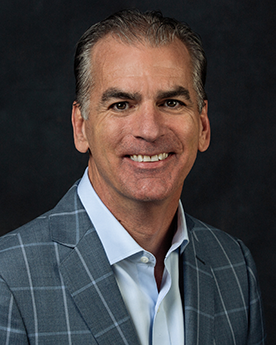
Eric Williams is the national director of redevelopment for Long Beach, California-based SCS Engineers. Williams is a former developer of environmentally challenged properties, having owned and redeveloped approximately $200 million in brownfield projects over a 40-year career.