

By Joe Gose
Lenders and mortgage bankers entered 2025 unsure how busy they would be. From President Trump’s seesawing tariff messages that ramped up market volatility to weak fundamentals in oversupplied Sun Belt markets, their misgivings were well-founded.
A sluggish start to the year cast a shadow over whether the government sponsored agencies (GSEs) of Fannie Mae and Freddie Mac would hit their multifamily loan purchase caps of $73 billion each.
But financings eventually gained momentum among the GSEs as well as life insurance companies, commercial mortgage-backed securities (CMBS) lenders and other debt providers, observers say.
Multi-housing originations through the first three quarters of 2025 increased 44 percent over the prior year, according to the Mortgage Bankers Association’s quarterly originations survey. By mid-December, intermediaries that work with Fannie Mae and Freddie Mac were confident that the agencies would meet their caps, or at worst, fall just a hair short.
The steady thrum of financings has cast 2026 in a much more favorable light. The market tumult that erupted on April 2, 2025 — or “Liberation Day” — when Trump slapped tariffs on imports subsided relatively quickly as he pivoted to relax some of the largest increases while negotiating agreements with countries.
As of September, the average tariff rate had increased to some 10.6 percent from 2.2 percent in January and had generated nearly $125 billion in revenue, according to the University of Pennsylvania’s Penn Wharton Budget Model.
More certainty surrounding tariffs combined with the Federal Reserve’s reduction of the federal funds rate by 75 basis points over three cuts in the fall of 2025 and strong economic growth — GDP rose at an annual rate of 4.3 percent in the third quarter — have contributed to a collapse in credit market volatility. As measured by the Move Index, bond volatility plunged to 60 in mid-December from a high of 140 in April.
Consequently, bond yields stabilized, particularly during the fourth quarter of 2025. The benchmark U.S. 10-year Treasury yield hovered around 4 percent from September 2025 to early 2026, but spiked on Jan. 20 after a selloff in the Japanese bond market over increased government spending and rising inflation in Japan. U.S. trade policy issues with Greenland also played a factor. By the close of business on Jan. 20, the U.S. 10-year Treasury yield stood at 4.29 percent, the highest level since August 2025.
The Federal Housing Finance Agency’s decision to increase the loan purchase caps for Fannie Mae and Freddie Mac to $88 billion each in 2026 is also contributing to merrier 2026 predictions. The FHFA’s unusually large year-over-year increase of 20 percent came as a surprise to many considering that typical increases have been around 3 to 5 percent.
“By the summertime, life insurance companies, debt funds, banks and CMBS typically begin to scale back, but this did not happen in 2025,” declares Ian Monk, head of conventional production at Lument, a New York-based mortgage bank. “There has been a substantial amount of liquidity in the multifamily market, and it has been full throttle on all fronts. Going into 2026, I think that liquidity will be even stronger.”
Eye on Demand
Despite the optimism at the start of the year, the number of opportunities to place that abundance of capital may fall short of expectations. According to the Bureau of Labor Statistics (BLS), revisions to the post-government-shutdown jobs report show that U.S. employers shed 105,000 payroll jobs in October, and employment for August and September was revised down by 33,000 jobs. The contraction in employment was caused by a combination of factors, including federal government job losses, slower hiring in the technology sector and statistical distortions caused by the fall government shutdown, which disrupted normal data collection. The BLS reported that 50,000 jobs were created in December.
On the bright side, the unemployment rate ticked down to 4.4 percent in December from 4.6 percent in November. Additionally, multifamily absorption dropped 73 percent in the third quarter of 2025 from a year earlier to 43,200 units, CBRE reports. A shrinking immigration base that is slowing population growth and new household
formation could further weigh on absorption, according to Scottsdale, Arizona-based Yardi Matrix, a commercial real estate researcher.
Combined with pockets of oversupply in the U.S., rent growth may remain flat at around 1.2 percent in 2026, Yardi Matrix says. Rent control proposals in some markets have also caught the attention of the multifamily sector (see sidebar).
Spreads in the property credit markets have compressed more in the past 12 months than in the prior five years, notes Alan Isenstadt, regional executive for the income property group at KeyBank Real Estate Capital.
For popular five-year loans and depending on property location, sponsor, leverage and other metrics, agency spreads are typically between 130 and 150 basis points, he says, making it a good time to lock in financing — at least for now.
“My belief is that we’ve hit bottom from a spread perspective,” asserts Isenstadt, who is based in New York. “Any further macroeconomic concerns — particularly around employment — could cause spreads to widen, offsetting any benefit to (benchmark rates) moving lower.”
KeyBank’s off- and on-balance sheet origination volume of $8 billion in 2025 included the arrangement of $448 million in Fannie Mae debt to refinance a portfolio of 19 apartment properties comprising 3,518 units in the Northeast. The GSE amortized the debt over 35 years subject to workforce housing rent requirements.
Refis Rule
As in recent years, refinancing drove the vast majority of multifamily lending in 2025 as many borrowers opted to delay selling and extend ownership with the hope of improving values, say mortgage intermediary professionals.
Among other deals, Lument recently arranged $74 million in Fannie Mae refinancing for Astra Apartments, a 243-unit asset with 50,000 square feet of ground-floor commercial space in Inglewood, California. The property is owned by Black Equities. The five-year, fixed-rate deal included cash-out proceeds and interest only payments for the full term.

Apartment refinancing made up about 70 percent of Berkadia’s financing activity in 2025, notes Josh Bodin, senior vice president of capital markets strategy and trading at Berkadia. While he and others anticipated that an uptick in acquisitions would continue into 2026, they expect refinancings to remain the bulk of business. “Even if we don’t see acquisitions increase, refinancing should continue to drive lending activity,” says Bodin, who is based in Ambler, Pennsylvania. “Because of the absolute abundance of debt in the capital markets, even sellers who can’t achieve their price targets are able to refinance at an attractive rate and wait for the fundamentals in the surrounding market or at their particular property to improve.”
Affordable Policy Incentives
Affordable housing professionals share a similarly confident outlook, says John Ducey, senior vice president and chief production officer on the affordable production team at Walker & Dunlop, a Bethesda, Maryland-based mortgage bank. One reason is that FHFA requires that at least half of Fannie Mae and Freddie Mac multifamily originations target mission-driven affordable and workforce housing, he explains.
But two affordable housing provisions in the One Big Beautiful Bill Act are encouraging to the sector, too, he says. One provision increased the allocation of 9 percent low-income housing tax credits (LIHTC), and the other halved the bond financing threshold to 25 percent for developers using 4 percent tax credits, which will allow the credits to be spread across a wider range of deals.

The 4 percent tax credit (30 percent subsidy) is used for the acquisition of existing buildings for rehabilitation and new construction financed by tax-exempt bonds. The 9 percent tax credit (70 percent subsidy) is usually used for new construction and substantial rehabilitation without federal subsidies.
The industry’s upbeat outlook was reflected in a Walker & Dunlop survey that took the pulse of developers, housing agencies, finance executives and others attending the Affordable Housing Finance Live conference in Chicago in November.
“This is the third year we’ve done the survey, and people are feeling more optimistic that there will be more transactions in 2026,” states Ducey. “The increase in tax credits is going to create new transactions. The bond test going to 25 percent from 50 percent is going to increase deals. And if I’m a lender, more deals are good.”
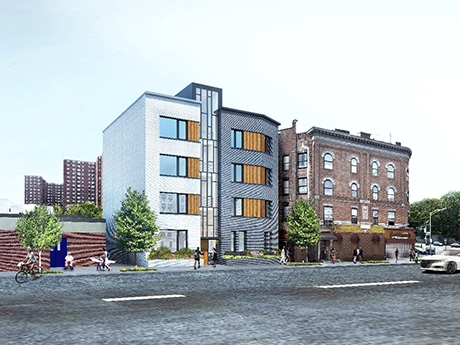
As of December, Walker & Dunlop was on track to surpass its 2024 affordable housing lending volume of some $1.5 billion. It recently arranged $12.6 million in LIHTC equity and some $6.4 million in permanent debt financing for Melrose Concourse. The project comprises three planned affordable housing developments totaling 72 units in the Bronx.
Lending Catalysts
A stubborn wall of maturing loans all but guarantees refinancing will continue to fuel financing business for the next few years. Midway through 2025, multifamily loans accounted for $105 billion of the total $300 billion in commercial real estate debt coming to term by the end of the year, according to a report in September 2025 from MSCI Real Assets, a commercial real estate researcher based in New York City. It also said that some $196 billion in apartment loans were expected to mature in 2026.
Meanwhile, increases in maintenance, repairs, insurance and other operating expenses along with property taxes could also boost refinancings by borrowers, particularly those in need of extensions after stretching to buy value-add deals with ultra-cheap, floating-rate debt before interest rates spiked in 2022.
“Multifamily values have reset, but expenses are going up and hurting the bottom line,” says Andy Margolis, senior vice president of the commercial finance group with Draper & Kramer in Chicago. “Equity dilution is at the top of mind of borrowers. We help them decide on the best course of action based on where interest rates are and their loan amount so that they can achieve their goals.”

Cred IQ, a suburban Philadelphia-based commercial property research firm that calculates an overall multifamily CMBS distress rate by aggregating delinquent and specially serviced loans, reported that multifamily assets had a distress rate of 10.8 percent in November, down 40 basis points from the prior year.
Still, lenders have begun to more earnestly dispose of troubled loans, says Jason Scott, a managing director and head of conventional loan production with Regions Real Estate Capital Markets, a commercial real estate intermediary.
“Some deals with bridge loans are underwater based on underwriting in 2021 when interest rates and cap rates were at all-time lows, and some of those lenders are not going to be made whole,” points out Scott, who is based in
Atlanta. “As more of these transactions happen and the loans get filtered out, I think it will make for an overall healthier multifamily market.”
In October, Regions Real Estate Capital arranged a $50.6 million Fannie Mae loan for the cash-out refinancing of Elevate the Crossings, a 336-unit community in Fuquay-Varina, North Carolina, owned by Signature Property Group. The fixed-rate financing features interest-only payments over the 10-year term, which is amortized over 35 years.
Investment Sales Recovery?
While refinancing activity is all but assured to remain the main event in 2026, mortgage bankers are cautiously optimistic that the modest upturn in acquisitions will accelerate as the new year progresses. U.S. multifamily investment sales through November 2025 reached $136.3 billion, a year-over-year increase of 4 percent, MCSI Real Assets reported. That less-than-stellar growth was likely skewed by a year-over-year sales volume decline of 22 percent in November, coincidental with the government shutdown.
Scott reports that while he was in Florida toward the end of 2025, agency representatives remarked that they had received a roughly equal amount of acquisition requests as refinance requests for the first time in several months. Overall, acquisition quote requests at the GSEs grew to more than 30 percent in 2025, up from a more typical 20 percent in the previous few years, Monk adds.
And that was largely Lument’s experience, too, he says. “The fact that we’re seeing more of these acquisition quote requests is a good signal, especially when compared with the lack of requests we saw in 2022 and 2023,” continues Monk. “Sometimes deals work, and sometimes they don’t. But at the end of the day, with the new $88 billion cap at each agency, there are some high expectations going into 2026.”
Along with more stable benchmark rates and tight financing spreads, the ability to buy down agency interest rates is helping investors pay for deals with cap rates in the mid-5 percent range, Isenstadt says. Such transactions are particularly workable when buyers tap debt based on the U.S. 5-Year Treasury yield, which was hovering around 3.8 percent as of Jan. 21, he adds.
In some cases, deep-pocketed institutional investors are accepting negative leverage to purchase newly delivered and stabilized projects in markets that offer long-term job and population growth, says Scott. That’s true even in some markets with supply overhang, like Nashville. Conversely, it’s tougher for more entrepreneurial buyers to raise equity for value-add plays because investors remain skeptical that rents will significantly increase, he adds.
“People were successful in 2020 and 2021 renovating assets and then flipping them after raising rents, but there has been a recalibration on hold periods,” observes Scott. “Investors have returned to having a longer-term view when it comes to owning property.”
Growth Drives Site Selection
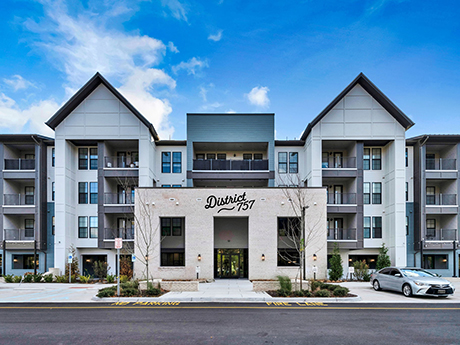
By and large, lenders remain bullish on growing Southeast and Sun Belt markets such as Atlanta, Charlotte and Raleigh, North Carolina, and other areas that are experiencing strong absorption despite new supply, multifamily professionals say. But the agencies in particular are drilling down on sponsorship and property metrics, and they are likely to avoid overbuilt Texas markets like Austin and San Antonio because of their existing exposure, they add. “Lenders are especially aggressive in markets with strong economic and demographic drivers where rent growth is sustainable,” emphasizes Bodin. “And they’re very focused on backing deals with quality sponsors and proven operators.” In December, Berkadia arranged the sale of and Fannie Mae financing for Kushner’s acquisition of the 295-unit District 757, in Norfolk, Virginia.
Lenders are also wary of smaller markets that developers hastily piled into, like Huntsville, Alabama, says Margolis. The Huntsville market added 3,300 units over the 12-month period that ended in October and closed out 2025 with a 25-year high vacancy rate of 13.7 percent, reports the Kirkland Co., a Brentwood, Tennessee-based multifamily brokerage. On the other hand, Midwest cities like
Chicago, Milwaukee and Indianapolis that have enjoyed steady rent growth without a glut of new unit deliveries are in vogue after being out of favor during the Great Recession and in the years following it, adds Margolis.
At that time, investors largely gravitated toward markets in the Sun Belt and Southeast, which were enjoying higher job and population growth than the Heartland.
Ultimately, overbuilding in several high-growth Sun Belt and Southeast markets muted construction lending in 2025 as developers pulled back, observers say, and lack of certainty due to tariffs early in the year reinforced the pause. But with absorption burning off excess units in certain markets, some developers are beginning to restart pipelines, according to Isenstadt. “We foresee active construction starts in the first quarter of 2026 as markets have cleared out a lot of oversupply issues,” he states. “And due to a lack of new projects, construction material and labor costs are coming down and starting to normalize.”
Embrace of Socialism Fuels Rent Control Pursuits, Raises Red Flag for Investors
Conventional multifamily investors in the United States have operated relatively free of heavy-handed dictates on rental rate decisions. Sure, expensive housing markets with progressive political leanings like New York City and San Francisco have longstanding rent control measures, but most other markets have showed no strong urge to follow suit.
That may be changing, however, as more jurisdictions are adopting or pursuing rent control programs or tweaking laws already in place amid the increasing cost of housing. That’s giving multifamily investors and lenders one more potential risk to consider when deciding where to place their capital.
In November, a coalition of tenant rights advocates, unions and progressive groups in Massachusetts claimed that they had obtained enough signatures to put the question of whether to establish rent control statewide on the ballot in November 2026. The proposal seeks to cap rent hikes to the lesser of annual inflation or 5 percent with some exemptions, including newer rental housing.
Meanwhile, Washington State passed a law in early 2025 that caps annual residential rent increases at the lesser of 7 percent plus inflation (Consumer Price Index) or 10 percent. And in September, the city of Passaic, New Jersey, amended an existing rent control law to halve allowable rent increases to 3 percent annually.
“Rent increases are often viewed in isolation, without considering rising operating costs,” says Ian Monk, head of conventional production at Lument. “Rent caps — while well-intentioned — are shortsighted. If they are introduced while expenses such as taxes, utilities and insurance continue to rise, the result is downward pressure on reinvestment, leading to a deterioration in both the quality and quantity of naturally occurring affordable housing.”
Interest in rent control aligns with a nascent national movement demanding more centrally planned solutions, one that typically paints landlords as greedy. In May, a survey conducted by the Cato Institute and YouGuv found that 62 percent of Americans ages 18 to 29 held a favorable view of socialism. That sentiment was certainly expressed in New York City last fall when voters there elected democratic socialist Zohran Mamdani as mayor. His promise to freeze rents in the city’s stabilized rent program was a major campaign plank.
While multifamily observers wonder how exactly a freeze would be defined — 0 percent? 2 percent? — they believe rent control policies in general are sure to give lenders pause or tighten the underwriting screws when determining whether to make loans in affected markets. Says Monk: “It’s something that we are actively watching and monitoring.”
— Joe Gose