
By Alfonso Costa Jr.
As the federal Opportunity Zone (OZ) program evolves into a permanent “OZ 2.0” framework, with new OZ census tracts taking effect Jan. 1, 2027, states like Florida are moving quickly to shape where capital flows by launching online portals.
For developers, investors, business owners and local officials, understanding how these rules are changing and how to engage in state-level nomination processes will be critical to harnessing tax-advantaged equity while deploying it into projects that deliver long-term community benefit.
Opportunity Zones 2.0 Brings More Flexibility and a Stronger Rural Focus
From a practitioner’s perspective, the biggest improvement in Opportunity Zones 2.0 is the move to a rolling five-year tax deferral structure instead of the rigid timing cliffs that shaped the original 2017 program.
Under Opportunity Zones 1.0, investors had to act before specific deadlines (end of 2019 and 2021) to qualify for the full step-up in basis benefits (15 and 10 percent, respectively). That compressed timeline often pushed capital to move faster than the realities of planning, underwriting and construction would allow. In practice, that meant too much emphasis on calendar timing and not enough on long-term project quality.
The new framework is more practical. During the new 10-year designation period beginning in 2027, investors can enter a Qualified Opportunity Fund (QOF) at different points in the cycle and still receive the 10 percent step-up in basis (hence paying capital gains tax on 90 percent of the originally deferred eligible gains) once they have held that investment in the QOF for five years.
That gives developers and investors more room to line up capital with entitlement schedules, local permitting approvals, market conditions, and actual development timelines.
Another major change is the stronger emphasis on rural communities. Opportunity Zones 2.0 creates enhanced incentives for the newly termed Qualified Rural Opportunity Funds (QROF), including a 30 percent step-up in basis after a five-year hold for qualified investments, compared with 10 percent in the standard structure. It also lowers the substantial improvement threshold in rural areas from 100 to 50 percent, making adaptive reuse and rehabilitation much more feasible in places where housing supply exists.
Just as important, the updated program places more emphasis on reporting outcomes such as jobs created and residential units delivered. That matters because it pushes the discussion beyond tax policy and toward measurable community impact.
Studies from the Economic Innovation Group (EIG) found that OZ development has significantly increased housing supply in designated communities. The OZ incentive increased new housing construction by 70 percent in these historically underinvested areas, generating more than 416,000 new residential addresses between 2019 and the first quarter of 2025.
Importantly, the authors also found that the new development and investment did not simply shift from nearby neighborhoods. For example, for every 100 new residential addresses attributable to the OZ incentive, roughly 97 are net new supply that would not have been built in the absence of OZs.
Florida Can Make OZ Sites More Investment-Ready by Pairing Incentives With Housing Policy
Over the past several years, one of the most promising policy initiatives that Florida has accomplished is strengthening the Live Local Act as a tool to expand the supply of affordable and workforce housing.
That incentive can work in a highly complementary way with Opportunity Zones because it helps shape not just where investment goes, but what kind of housing gets built. While Opportunity Zones alone do not require restricted rents or affordability set-asides, Live Local construction offers benefits, including local property tax exemptions, that can encourage developers to deliver housing aligned with workforce and affordability goals.
When those tools are used together, the result can be far more effective. Opportunity Zones can help draw capital into underinvested areas, while Florida’s housing policies can help guide that investment toward outcomes that benefit existing residents and working families. That is the right standard for success.
Florida’s Rollout Offers a Useful Model
If there is one implementation lesson that stands out, it is the importance of transparency.
Florida Commerce, the state agency responsible for economic, community and workforce development, has done a great job communicating with stakeholders and the public writ large, publicizing workshops and events and creating a process for submitting recommended census tracts that feels open and transparent rather than closed.
That kind of outreach strengthens the quality of the selection process and builds trust with local community leaders and organizations.
Opportunity Zones work best when the designation process is clear, participatory and grounded in real local feedback. If OZ 2.0 is going to support multifamily and affordable housing in a meaningful way, it will require exactly that kind of public-private coordination from the beginning. For those engaged in the process, the nonprofit organization Accelerator for America offers a downloadable toolkit that can help local leaders identify and assess high-priority tracts.
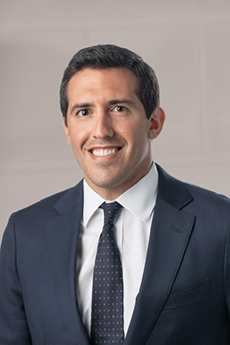
Alfonso Costa Jr. is chief operating officer of the Falcone Group, a Boca Raton, Florida-based development and investment firm. Costa served as deputy chief of staff and Opportunity Zones lead for the U.S. Department of Housing and Urban Development (HUD) during the first Trump administration.