


The conversation around housing affordability has never been more urgent or nuanced. The dominant development narrative often centers on rising costs and supply constraints. But zoom out, and the story becomes one of shifting household demographics, evolving expectations around wellness and a changing definition of what “home” really means.
For multifamily developers, investors and architects, these trends demand fresh thinking and bold solutions that can answer the definition of home beyond the traditional meaning.
The fourth and latest wave of the America at Home Study, conducted in spring 2025, is a window into these dynamics. Based on responses from more than 6,000 adults nationwide, the study explores how American renters and homeowners live, what they want in a home and why their needs are changing.
Smaller Households, Larger Implications
The U.S. housing market is still largely shaped around an outdated ideal of married couples with children living in single-family suburban homes, but today that model fits only a minority of the population.
According to Kantar, a data analytics and consulting company that provides consumer insights on the attitudes, values and behaviors impacting purchase behavior, and a collaborator on the America at Home Study, 64 percent of U.S. households are now made up of just one or two people.
Fewer Americans are having children or forming traditional nuclear families, a trend already impacting public infrastructure like school districts, where declining enrollment is leading to the repurposing of school properties into residential communities.
Meanwhile, single-person households have the lowest homeownership rate in the country (46 percent), yet they represent one of the largest segments in need of attainable housing options. For the multifamily sector, this is a demographic calling for more diverse product offerings, more flexible unit design greater emphasis on affordability, a sense of community and wellness in design.
Renting Is Not a Phase, It’s a Reality
A significant share of Americans, especially younger ones, aren’t currently on a path to homeownership. They’re rethinking the path entirely. In our most recent study, 9 percent of renters said they no longer aspire to own a home. Among renters overall, there was a 3 percent drop in those who associate “home” with “ownership,” down from 80 percent in 2022 to 77 percent in 2025. Instead, more Americans are defining home by how it makes them feel — safe, secure and supported.
Still, the dream of ownership persists with acceptance of new forms. Half of all respondents said they would be open to a rent-to-own option to increase their ability to buy. This is particularly relevant for the build-to-rent and multifamily sectors, which are uniquely positioned to offer hybrid models that support both rental stability and long-term homeownership pathways.
Trade-Offs with Purpose
Affordability remains a significant barrier, but renters are being pragmatic, rather than rigid. When asked what trade-offs they’d accept to increase their chances of buying a home, respondents were most willing to compromise on the following:
- A suburban location (60 percent)
- A different or less expensive location (50 percent)
- Rent-to-own options (50 percent)
- Smaller yards (41 percent)
- Smaller homes (39 percent)
- Modular or manufactured homes (32 percent)
These data points are a clear signal to the industry that today’s consumers are open to creative housing solutions, especially if those solutions allow them to live in communities that support their financial, physical and emotional well-being.
Wellness as a Design Imperative
Wellness has shifted from a nice-to-have to a top motivator for housing decisions. When we asked consumers why certain features were important to them, the most cited reason was that they improve health and wellness, rising from 43 percent in the previous wave to 60 percent today, outpacing motivations like saving money or conserving energy. The demand for features like whole-home water filtration (70 percent, up from 43 percent) and air purification (69 percent, up from 48 percent) also jumped significantly in importance.
This is more than a personal priority. It’s a market differentiator for multifamily developments. Wellness should be integral to the core design and operation. For renters, who are more likely to feel cost-burdened or transient, these features become a reason to choose one community over another, and they become a reason to stay.
Combatting Loneliness Through Design
Beyond physical health, communities must address the growing epidemic of loneliness. Americans are craving third places — walkable hubs that foster informal, everyday interactions. For the first time in our study’s history, respondents prioritized walkability to coffee shops and casual eateries (49 percent) over traditional amenities like trails (48 percent).
Access to these walkable amenities can help provide an antidote to the loneliness epidemic. The 2024 American Social Capital Study found that people living in neighborhoods with civic infrastructure like parks, coffee shops and breweries are over three times more likely to say they have close friends than those in communities without such features (32 percent versus 9 percent).
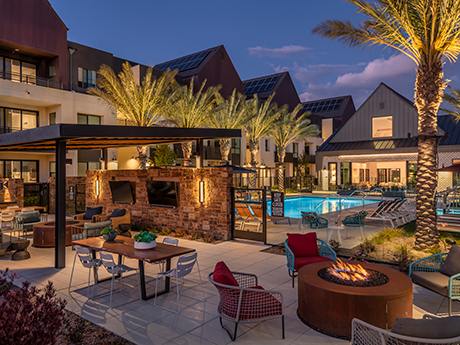
This opens up new programming possibilities: wellness zones, coworking lounges, activated courtyards and mixed-use ground-floor retail that genuinely contributes to residents’ social lives.
A New Era of Housing Demands a New Approach
At its core, “home” is still a deeply emotional concept, as 94 percent of Americans associate it with safety. But increasingly, they also see it as a financial burden. One in five respondents said that home is now a source of stress (up from 14 percent in 2022). If the homes we design remain out of reach for most Americans, then we are not solving the housing crisis. We are compounding it.
As developers, architects and investors, we must meet this moment with creativity, empathy and data-driven insight. That means expanding the types of housing we build. It means prioritizing wellness, investing in spaces that foster belonging and designing for the households we actually have now, instead of the ones we once had.
The future of housing is not just smaller or more affordable. It’s smarter, more connected and more personal.
Nancy Keenan is president and chief executive officer of Pleasanton, California-based DAHLIN Architecture | Planning | Interiors.