
Architecture & Design

Flatiron

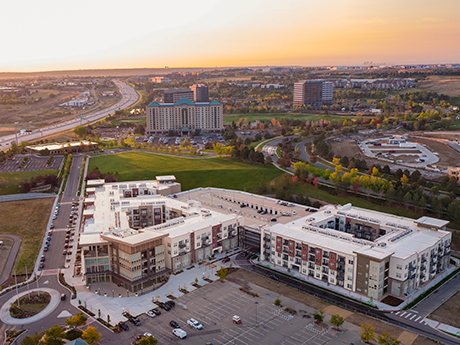
By Carl Malcolm and W. Brian Keith Across the United States, aging regional malls are entering a new phase in the evolution of suburban landscapes. Once designed as inward-facing retail environments surrounded by vast parking lots, many now sit within fully developed communities that have grown up around them. What were once peripheral shopping destinations are occupying some of the most strategically located land in metropolitan areas — often 50 to 100 acres at highly visible intersections with strong infrastructure and regional access. As traditional retail models struggle to compete …

0 FacebookTwitterLinkedinEmail
Rajiv-Ramakrishnan-FK

By Rajiv Ramakrishnan Veterans are not a one-size-fits-all population. Some are transitioning back to civilian life after active service, while others are aging in place or living with physical injuries, PTSD or other invisible challenges. While affordability and accessibility remain essential, successful veteran housing must also support how residents experience their environment every day. Architecture does more than provide shelter. Thoughtful design can support independence, encourage connection and create places where residents feel safe, comfortable and at home. Beyond Affordability: Designing for Stability Affordable housing removes one of the largest …

0 FacebookTwitterLinkedinEmail
Design-panel-web

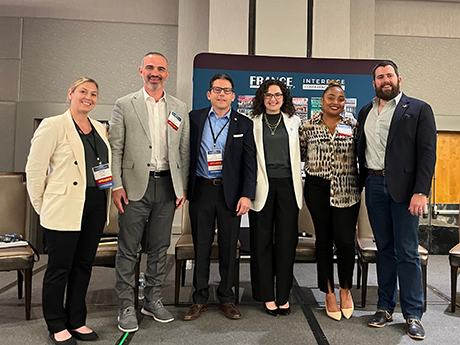
By Matthew Auchincloss   The dire need for more affordable rental housing across the country has been well-documented, but the pathway to delivery is full of potential pitfalls, says Ian Hunter, regional director at Dwell Design Studio, who operates out of the architectural firm’s Atlanta office. In short, there are several ways for projects to “get stuck,” he points out.    At the top of the list is funding, but the entitlement process, design, construction costs and operations are also potential impediments to getting an affordable housing project from conception to inception.   …

0 FacebookTwitterLinkedinEmail
In-Town-Lubbock

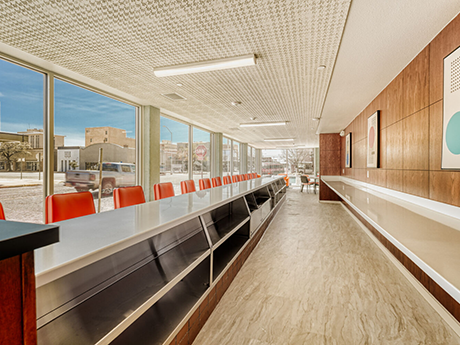
LUBBOCK, TEXAS — Housing Trust Group (HTG), AM Affordable Housing and Thoman and Butler have completed and opened the redevelopment of the In Town Inn, a mid-century motor lodge, into a new affordable housing community. Located at 1202 Main Street in downtown Lubbock, the 56-unit community serves residents earning at or below 30, 50, 60 and 80 percent of area median income. Built in 1964, the property functioned as a motel until the 1990s when it became the Jim Kimmel Center rehab facility. HTG acquired the property in 2023. Wallace …

0 FacebookTwitterLinkedinEmail
The-Continental-San-Antonio

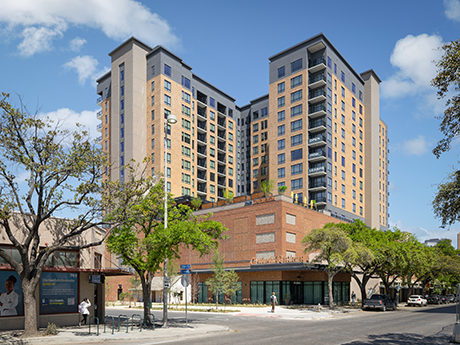
SAN ANTONIO — Architect BKV Group and developer Weston Urban have completed The Continental Residences in San Antonio. The 16-story building features studio, one- and two-bedroom apartments, including a selection of two-story townhomes. A sixth-floor amenity suite is home to a clubroom, coworking space, an indoor-outdoor fitness center and an outdoor pool deck with lounge areas as well as an outdoor kitchen. A lounge is located on the 16th floor with views of San Antonio. The 290-unit high-rise is adjacent to The Continental Hotel, a structure built in 1896, approximately, …

0 FacebookTwitterLinkedinEmail
Mark-English

By Mark English One of the most famous illustrations of the Dunning–Kruger effect dates back to 1995 in Pittsburgh where two men robbed a bank in broad daylight without wearing masks, sunglasses, fake mustaches or any form of disguise. Unsurprisingly, they were quickly identified on closed-circuit television and arrested. What stunned law enforcement — and later the academic community — was the explanation the suspects offered. They genuinely believed that by rubbing lemon juice on their faces, they would be invisible to security cameras. Their reasoning was that lemon juice …

0 FacebookTwitterLinkedinEmail
Myles-Brown

By Myles Brown It’s no secret that building affordable housing comes at a premium. In the Northeast, where I work, and across the country, development costs for affordable units typically run 20 percent to 30 percent higher than those for market-rate apartments. Why? The answer lies in a combination of factors, but the primary reason is that complex funding structures often bring specific regulations, design requirements and labor mandates that drive up both soft and hard costs. Yet, in our experience designing multifamily projects, affordability doesn’t have to come at …

0 FacebookTwitterLinkedinEmail
The $85 million conversion of a former factory at 321 Ellis St. in New Britain, Conn., created 154 units within a property developed between 1910 and 1930. JCJ Architecture designed the project. WinnCompanies was the developer.

By Christine Faverio When it comes to adaptive reuse, the opportunities to preserve cultural heritage, promote sustainability and provide affordable housing are undeniable. But while these projects are immensely rewarding, they also come with complex regulatory, financial and design challenges.  In the Northeast, projects such as the Ellis Block Apartments in New Britain, Connecticut, designed by JCJ Architecture, reveal several key strategies that can help developers and design teams successfully navigate adaptive reuse. Recognize Buildings with Adaptive Reuse Potential Identifying the right candidate building is the first step. Recognizing the …

0 FacebookTwitterLinkedinEmail
Brad-Bane-Ankrom-Moisan

Developers today are under mounting pressure to meet energy codes, achieve carbon reduction goals and deliver housing that is healthy, comfortable and affordable. Whether market-rate or affordable housing, the reality is that people want homes that are not only well-designed but also economical to operate. That’s why attention to energy efficiency and utility costs has become such a critical factor in leasing and retention. In some cases, this pressure has even pushed developers toward more ambitious approaches such as Passive House strategies or other high-performance design measures. At the same …

0 FacebookTwitterLinkedinEmail
Nancy-Keenan-DAHLIN

The conversation around housing affordability has never been more urgent or nuanced. The dominant development narrative often centers on rising costs and supply constraints. But zoom out, and the story becomes one of shifting household demographics, evolving expectations around wellness and a changing definition of what “home” really means. For multifamily developers, investors and architects, these trends demand fresh thinking and bold solutions that can answer the definition of home beyond the traditional meaning. The fourth and latest wave of the America at Home Study, conducted in spring 2025, is …

0 FacebookTwitterLinkedinEmail
Newer Posts