

By Douglas Kelin and Bryan Pritchard
Build-to-rent (BTR) has quickly become one of the most prominent strategies in residential real estate. In 2024 alone, the number of BTR homes delivered in the United States was approximately 10 times higher than it was a decade earlier. While that growth shows no signs of slowing, the version of build-to-rent that investors are pursuing today looks very different from the development-heavy model of just a few years ago.
A combination of regulatory pressure, shifting market conditions and strategic refinement is pushing the sector toward a more structured approach that increasingly resembles a forward purchase model rather than traditional development. That shift is changing the risk calculus for multifamily owners and investors, with corresponding impacts for control and execution.
While the Trump administration’s recent executive order aimed at curtailing institutional investors from acquiring single-family homes contained an exception applicable to build-to-rent projects — those developments that are planned, permitted, financed and constructed as rental communities — the 21st Century ROAD to Housing Act as recently passed by the Senate established significant limitations on BTR, including a seven-year divestiture requirement, which effectively ended new BTR development across the country. Efforts are underway by numerous industry groups and members of the U.S. House of Representatives to walk back provisions of the ROAD Act by carving out BTR.
In this environment, many investors are taking a risk-avoiding step away from directly financing developers’ BTR projects in favor of phased acquisitions throughout the construction cycle.
From Development to Forward Purchase
In essence, build-to-rent projects are developed as singular housing communities that operate as long-term rentals rather than being sold individually. Early such projects typically involved developing cottage, townhome or single-family rental communities from the ground up. Though the product differed from traditional apartments, the execution did not, and sponsors still faced entitlement risk, construction volatility and long timelines to stabilization.
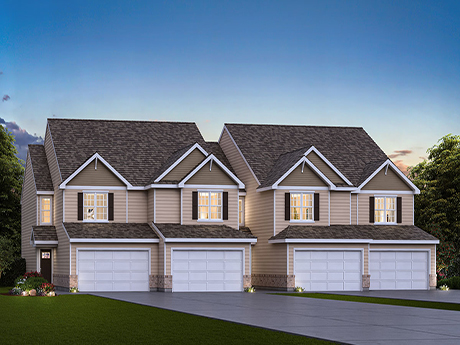
Over time, sponsors began shifting away from full development exposure, moving toward acquiring newly constructed communities designed specifically for rental use rather than taking on the development process themselves. These projects are typically made up of two- to four-bedroom townhomes in attached configurations, offering the space and functionality of single-family living in a more efficient and scalable format.
This approach offers greater flexibility, with communities often delivered and sold in phases. Builders complete units as they receive certificates of occupancy, and investors close on each tranche as it becomes available. This phased approach allows capital to be deployed incrementally, reducing upfront risk while giving sponsors more control over the timing and pace of investment.
A more structured version of this phased approach has emerged in the form of forward purchase agreements, typically through partnerships between sponsors and national homebuilders.
Under the forward purchase approach:
- Builders handle land acquisition, entitlements and construction
- Sponsors commit in advance to purchase completed homes at a fixed price
- Closings occur on a rolling basis as units are delivered, allowing for phased capital deployment
These arrangements also come with a set of structural requirements designed to preserve the community’s identity as a rental asset.
In many cases:
- A declaration is recorded at each closing restricting how units can be used and sold
- Owners and affiliates are prohibited from occupying units
- Individual unit sales are restricted for a defined period, often around 10 years
Together, these provisions help establish valuation based on stabilized rental income while maintaining consistent ownership across the community, including within any required homeowners association structure.
A BTR developer is often required to establish a homeowners association so that in the event the lots or homes were ever sold separately from each other, a mechanism will already be in place to handle community maintenance.
How Regulation Is Redefining Build-to-Rent
Regulatory pressure on institutional ownership of single-family housing is also beginning to influence how build-to-rent is evaluated. Recent housing proposals introduced at both the House and Senate levels signal a growing focus on limiting large-scale ownership of detached homes by institutional investors. While the specifics remain uncertain, the policy direction is clearly framed as preserving access to homeownership by reducing competition from institutional capital.
As a result, not all build-to-rent projects are viewed the same way. Simply labeling a project as “single-family rental” is no longer enough. What matters now is how the housing is developed, delivered and positioned in the market.
Purpose-built, rental-specific communities — often delivered through forward purchase agreements — are increasingly viewed as the most resilient form of the model, as they add new housing supply and are less exposed to regulatory pressures.
At the same time, detached single-family rentals, whether acquired individually or developed as horizontal communities, are increasingly viewed as substitutes for for-sale housing and therefore more exposed to potential regulation.
Where Forward Purchase Still Carries Risk
The forward purchase model is not without risk. While it removes much of the traditional development burden, it introduces a different set of challenges that sponsors must be prepared to manage.
Until final closing, sponsors have limited control over key aspects of the project, including construction timing, methods and overall quality. Many of the governing documents, such as homeowners association requirements and other encumbrances, are also shaped during development, often with limited input from the eventual owner.
Examples of such encumbrances can involve the recording of easements when the land is being entitled, which may be while the project is under contract with a buyer.
The builder is permitted to record easements, such as for utilities and driveways, to make the community function, but the end buyer of the development doesn’t have access to or knowledge of what is being recorded and/or included on the plat. Therefore, an investor has limited rights to object to anything that could be deemed as problematic.
Due diligence can be equally constrained. In many cases, sponsors are evaluating land or partially completed projects where entitlements are still in process and critical documents have not yet been finalized or recorded. That lack of visibility can make it difficult to fully assess risk before committing capital.
If a project does not reach completion, sponsors may be left with a partially finished asset and limited recourse against the builder. Even when projects proceed as planned, many terms are effectively non-negotiable, leaving sponsors in a “take it or leave it” position on decisions that will have long-term implications.
What This Means for Owners and Investors
Despite these challenges, build-to-rent remains one of the most attractive options in a more constrained investment environment, particularly as forward purchase structures allow sponsors to access new housing without taking on full development risk.
For sponsors who understand their markets and have the ability to successfully lease and operate these communities, the model can be highly effective. As the sector continues to mature, success will depend on understanding how forward purchase structures reduce certain risks while shifting others, and aligning those tradeoffs with an investor’s strategy and capabilities.
Douglas Kelin is a real estate partner at law firm Honigman LLP, and Bryan Pritchard is founder and CEO of Tricap Residential Group.