
Features

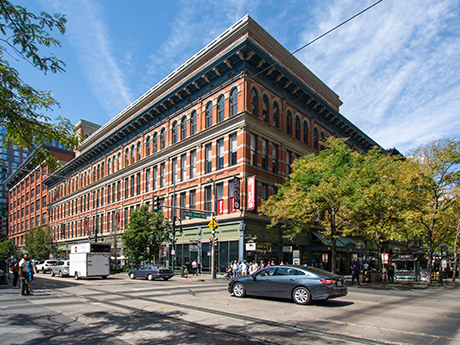
Denver-Dry-Goods

Skillful players are leveraging a bevy of public and private funding sources to get projects across the finish line. By Jack Rogers As costs of affordable housing projects continue to rise, developers are meeting the challenge by pulling together a resilient capital stack with a growing range of sources for gap financing, bridge loans and grants. They’re also diversifying the range of projects they undertake and mitigating their costs by redeveloping underutilized publicly owned property, acquiring leases for sites that are being rezoned to housing from other uses and with …

0 FacebookTwitterLinkedinEmail
MFTX-Leasing-Management-Panel

By Taylor Williams DALLAS — Technological innovation has long been a cornerstone of managing and leasing multifamily properties, and that feature of the business has only been augmented in the era of artificial intelligence (AI). But for all the operational conveniences and efficiencies that AI potentially brings to the table, multifamily management has not yet reached the point of phasing out the human element. Almost immediately after the members of the leasing and management panel at the annual InterFace Multifamily Texas conference had introduced themselves, this fundamental premise of multifamily …

0 FacebookTwitterLinkedinEmail
Julington

By Paul Berry Jacksonville is increasingly recognized as an outstanding place to live, work and build a business. Its multifamily sector, while recently challenged by a wave of new supply, is set for a rebound that will reward patient investors. With peak deliveries now in the rearview mirror, the metro area is well positioned for a strong cyclical upswing, complementing its already robust economic trajectory. Core Drivers: Population Growth, Pro-Business Jacksonville is a legitimate, big-league city. The population of the metro area has reached 1.76 million, growing by about 37,000 …

0 FacebookTwitterLinkedinEmail
Student-Housing

ATLANTA — Andrew Layton, chief acquisition officer for Atlanta-based Student Quarters, knows that from a commercial real estate investment standpoint, the student housing sector possesses a key advantage: the relative permanence of many flagship universities nationally. “There is no risk of the University of Kentucky uprooting itself from Lexington and moving to Frankfort anytime soon. In the conventional multifamily world, neighborhoods come, neighborhoods go. What was hot yesterday may not be so hot today. What was cold yesterday may be the flaming new market tomorrow. That’s just not the case …

0 FacebookTwitterLinkedinEmail
Marea-Noblesville

By Kristin Harlow Higher rents and lower turnover are a few of the key advantages build-to-rent (BTR) properties have over traditional multifamily product, according to investors. Meanwhile, the sector continues to experience strong demand from tenants priced out of the housing market as well as renters by choice who prefer flexible, maintenance-free living. BTR units typically have all the perks of a single-family home — privacy, garages and yards — without the hassles of landscaping or property maintenance. “The BTR sector is experiencing significant growth because it addresses a genuine …

0 FacebookTwitterLinkedinEmail
Legends-KC

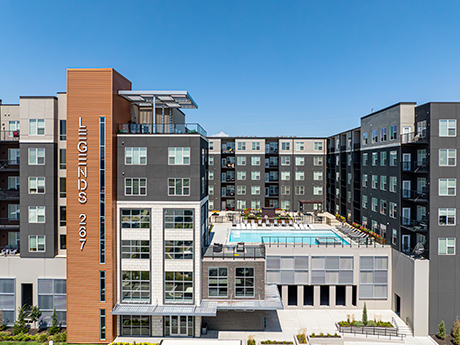
By David NelsonHamilton Zanze There’s a real argument to be made that Kansas City is one of the country’s most overlooked cities as well as one of its most underappreciated multifamily investment markets. The metro’s residents and visitors can provide ample testimony to the city’s jazz culture, museums, sports scene, affordability and world-class barbecue. But beyond lifestyle, Kansas City has the qualities that matter most to multifamily investors: steady population growth, a balanced economy, measured supply and consistent apartment demand. For investors looking for durable performance across market cycles, metro …

0 FacebookTwitterLinkedinEmail
Pocket-Neighborhood

By Miles AlexanderAlexander Goshen Traditional, large-scale urban developments have failed to create vibrant, sustainable neighborhoods. Pocket communities represent a transformative approach that addresses those fundamental shortcomings through innovative public-private partnerships and financing mechanisms. Small-scale developments of eight to 12 homes clustered around shared common spaces are experiencing significant growth as municipalities, developers and investors recognize their superior capacity to foster community connection, financial viability and environmental sustainability. What Are Pocket Communities? Pocket neighborhoods are clustered groups of smaller residences gathered around a shared open space, such as a garden courtyard, …

0 FacebookTwitterLinkedinEmail
Delta-Pearl-DC

In Washington, D.C., access to affordable housing remains a critical challenge. According to the National Low Income Housing Coalition, as of 2023, more than 54,700 extremely low-income renter households lived in the city, yet only 17,300 affordable and available rental homes were on the market at that income level.   D.C. is far from alone. Nationwide, there are only 35 affordable homes for every 100 extremely low-income renters, leaving millions without access to stable, secure housing. Renovating affordable housing, whether for refinancing, RAD (Rental Assistance Demonstration) conversion or preservation, is …

0 FacebookTwitterLinkedinEmail
The-International-at-Valley-Ranch

Multifamily fundamentals are showing encouraging signs for investors. CBRE reports that more than two units were absorbed for every unit completed during the second quarter of this year, lowering the national vacancy rate to 4.1 percent, down from 5.5 percent one year prior.  Year-over-year effective rent growth increased to 1.2 percent during the second quarter, the first time in two years the rate surpassed 1 percent.  CBRE estimates that multifamily construction starts at midyear were 74 percent below their 2021 peak and 30 percent below their pre-pandemic average. Yardi Matrix …

0 FacebookTwitterLinkedinEmail
Apex-SouthPark-Charlotte

By Joe Gose Compare the dynamics of the multifamily debt environment of four years ago to today, and at first glance not much appears to have changed. A wave of capital ready for deployment? Check then and check now. The same can be said for the type of lenders active in the space: Life insurance companies, Fannie Mae and Freddie Mac, private credit sources, and banks were all hungry for deals back then and have a similar appetite today. Of course, the economics have shifted dramatically. A spike in interest …

0 FacebookTwitterLinkedinEmail