
By Mark English One of the most famous illustrations of the Dunning–Kruger effect dates back to 1995 in Pittsburgh where two men robbed a bank in broad daylight without wearing masks, sunglasses, fake mustaches or any form of disguise. Unsurprisingly, they were quickly identified on closed-circuit television and arrested. What stunned law enforcement — and later the academic community — was the explanation the suspects offered. They genuinely believed that by rubbing lemon juice on their faces, they would be invisible to security cameras. Their reasoning was that lemon juice …
Architecture & Design
By Myles Brown It’s no secret that building affordable housing comes at a premium. In the Northeast, where I work, and across the country, development costs for affordable units typically run 20 percent to 30 percent higher than those for market-rate apartments. Why? The answer lies in a combination of factors, but the primary reason is that complex funding structures often bring specific regulations, design requirements and labor mandates that drive up both soft and hard costs. Yet, in our experience designing multifamily projects, affordability doesn’t have to come at …
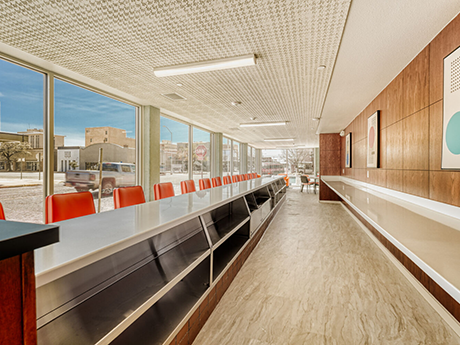
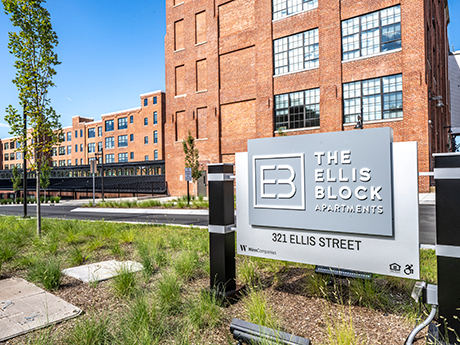
By Christine Faverio When it comes to adaptive reuse, the opportunities to preserve cultural heritage, promote sustainability and provide affordable housing are undeniable. But while these projects are immensely rewarding, they also come with complex regulatory, financial and design challenges. In the Northeast, projects such as the Ellis Block Apartments in New Britain, Connecticut, designed by JCJ Architecture, reveal several key strategies that can help developers and design teams successfully navigate adaptive reuse. Recognize Buildings with Adaptive Reuse Potential Identifying the right candidate building is the first step. Recognizing the …
Designing for Low-Carbon, High-Density Living — Lessons for Sustainable Multifamily Development
Developers today are under mounting pressure to meet energy codes, achieve carbon reduction goals and deliver housing that is healthy, comfortable and affordable. Whether market-rate or affordable housing, the reality is that people want homes that are not only well-designed but also economical to operate. That’s why attention to energy efficiency and utility costs has become such a critical factor in leasing and retention. In some cases, this pressure has even pushed developers toward more ambitious approaches such as Passive House strategies or other high-performance design measures. At the same …
Rethinking Design in an Age of Smaller Households and Shifting Generational Financial Priorities
The conversation around housing affordability has never been more urgent or nuanced. The dominant development narrative often centers on rising costs and supply constraints. But zoom out, and the story becomes one of shifting household demographics, evolving expectations around wellness and a changing definition of what “home” really means. For multifamily developers, investors and architects, these trends demand fresh thinking and bold solutions that can answer the definition of home beyond the traditional meaning. The fourth and latest wave of the America at Home Study, conducted in spring 2025, is …
KTGY, Hanover Co. Break Ground on Market-Rate Community in Bay Area Mixed-Use Project
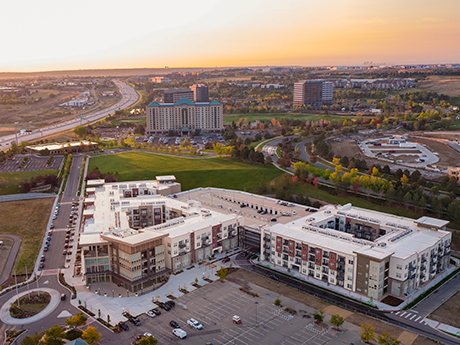
SAN JOSE, CALIF. — Developer Hanover Co. and architect KTGY have begun construction of Hanover Parkside, the first residential building located within Coyote Creek Village, a 22-acre mixed-use development in North San Jose. KTGY designed the three market-rate buildings, comprising 1,140 units, within 9.3 acres of the project. The master plan also includes 154 for-sale townhomes developed by SummerHill Homes and 136 affordable rental apartments that The Pacific Cos. will deliver in future phases. The first building, Hanover Parkside, is slated for completion by the fourth quarter of 2027. The …
In Washington, D.C., access to affordable housing remains a critical challenge. According to the National Low Income Housing Coalition, as of 2023, more than 54,700 extremely low-income renter households lived in the city, yet only 17,300 affordable and available rental homes were on the market at that income level. D.C. is far from alone. Nationwide, there are only 35 affordable homes for every 100 extremely low-income renters, leaving millions without access to stable, secure housing. Renovating affordable housing, whether for refinancing, RAD (Rental Assistance Demonstration) conversion or preservation, is …
By Brandi Campbell Wood Forward-thinking multifamily developers are rediscovering a housing type that predates modern zoning: accessory dwelling units (ADUs). An ADU is defined as a smaller, independent residential unit located on the same lot as a detached single-family home, according to the American Planning Association, a nonprofit organization that supports the field of urban and regional planning. What was once commonplace in early 20th-century developments — garden cottages, cluster housing and secondary units within larger properties — is experiencing a renaissance driven by new policy opportunities and compelling financial …
InterFace Conference Coverage: Affordable Housing Architects Push the Limits of Design Amid Rising Costs
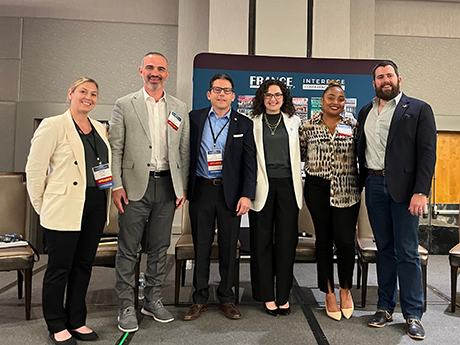
ATLANTA — The United States is short 6.8 million affordable housing units, according to the National Low Income Housing Coalition. Developers and owners are driven by a mission to meet this critical shortage. This national problem is fueling the work of architects and designers. Like developers, they, too, have picked up the baton — or the pencil, as the case may be — and applied practices that are custom-tuned to bring much-needed rental housing to market as quickly and efficiently as possible. Editor’s note: InterFace Conference Group, a division of …
Increasing the supply of affordable housing is critical to addressing the severe housing crisis the United States faces. However, many investors think the returns on affordable housing are not sufficient to merit the time and expense of development. New multifamily residential projects of all types are more expensive than ever, thanks to recent inflation and high interest rates, and in the affordable segment, balancing cost with quality livable design has never been more complex. With rent and income restrictions, affordable projects require a mindset beyond counting pennies to make the …